
Posts tagged as:

independent contractors

Taxpayer asks:

While putting together a new group of guest posters for my site, a tax question hit me! Is the time I spend guest posting on other blogs for promotional purposes tax deductible? i.e. I don’t get paid for the post – my only compensation is the link back. But I could be getting paid for the post… so is the amount I charge for that service a marketing business expense?

If it is – I’m sure you have many readers that would be interested!

Thanks so much!

Taxgirl says:

Gosh, I sure wish it was – since I spend so much time writing for other publications and blogs – but it’s not. The IRS likes to match items of deduction with items of income. If they allowed a deduction for the cost of your time, then they’d require you to value the same for purposes of attributing income (the “value” of the article). But they don’t. Since there’s no income component, there’s no deduction.

Even though it feels odd, this is consistent with the IRS’ position on the treatment of services when there’s no compensation throughout the Tax Code. You can’t deduct your time for volunteering, even though it’s valuable, or time spent on services for which you didn’t get paid because you were “stiffed” by a client (hey tax geeks, most of my readers are cash based so no need to write in to tell me how this isn’t *quite* true for accrual based taxpayers).

I do have one piece of good news, though. Any out of pocket expenses related to the piece (i.e. money spent on paid art, research and the like) can be deducted as promotional expenses. So all is not lost!

Thanks for writing in – and good luck with the blog! Guest posting is a great way to promote your blog or services. I’m always happy to accept ideas for guest posts at taxgirl – just drop me a note!

Like any good lawyer, I need to add a disclaimer: Unfortunately, it is impossible to give comprehensive tax advice over the internet, no matter how well researched or written. Before relying on any information given on this site, contact a tax professional to discuss your particular situation.

Have a question? Ask the taxgirl!Now on Facebook!

{ 3 comments }

Taxpayer asks:


Aloha

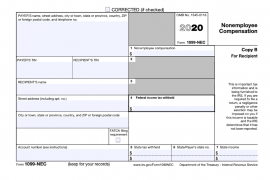
Do I have any liability if I issue a 1099 to a contractor but they fail to report it or file their taxes?

Thanks for your input.

Taxgirl says:

Nope. Your job is done so long as you properly and timely issue the form 1099 to the independent contractor and file the associated paperwork (in most cases, a form 1096).

If the taxpayer fails to file, that’s on him (or her). The same would be true for an employer who issues a form W-2.

Like any good lawyer, I need to add a disclaimer: Unfortunately, it is impossible to give comprehensive tax advice over the internet, no matter how well researched or written. Before relying on any information given on this site, contact a tax professional to discuss your particular situation.

Have a question? Ask the taxgirl!Now on Facebook!

{ 3 comments }

Taxpayer asks:
Hey taxgirl, if I’m a freelancer, buy a desk/chair and try to deduct it is that like begging for an audit? Advice on what to deduct/not?

Taxgirl says:

First of all, I’m psyched! This was my first taxgirl question via twitter! How exciting!

And now for the answer! The short answer is yes, deduct away.

Working from home or freelancing is tough because you have to supply everything yourself – from furniture to computers to office supplies. You are also responsible for your own benefits, such as health insurance. But the good news is that because you have to spend money to make money, these things are deductible.

The easy way to get started with deductions is to walk through your day and take stock of all of your expenses – from post-it notes to train tickets. Ask yourself which of these expenses you would NOT be responsible for if you weren’t freelancing or working from home… You wouldn’t include meals, for example, because you have to eat, working or not. But you would include business cards, computers and the like. A good rule of thumb then, is to think about what is “ordinary” and “necessary” for you to operate your business (those are the terms that the IRS likes to use) and start your deduction list from that point.

[click to continue…]

{ 1 comment }