
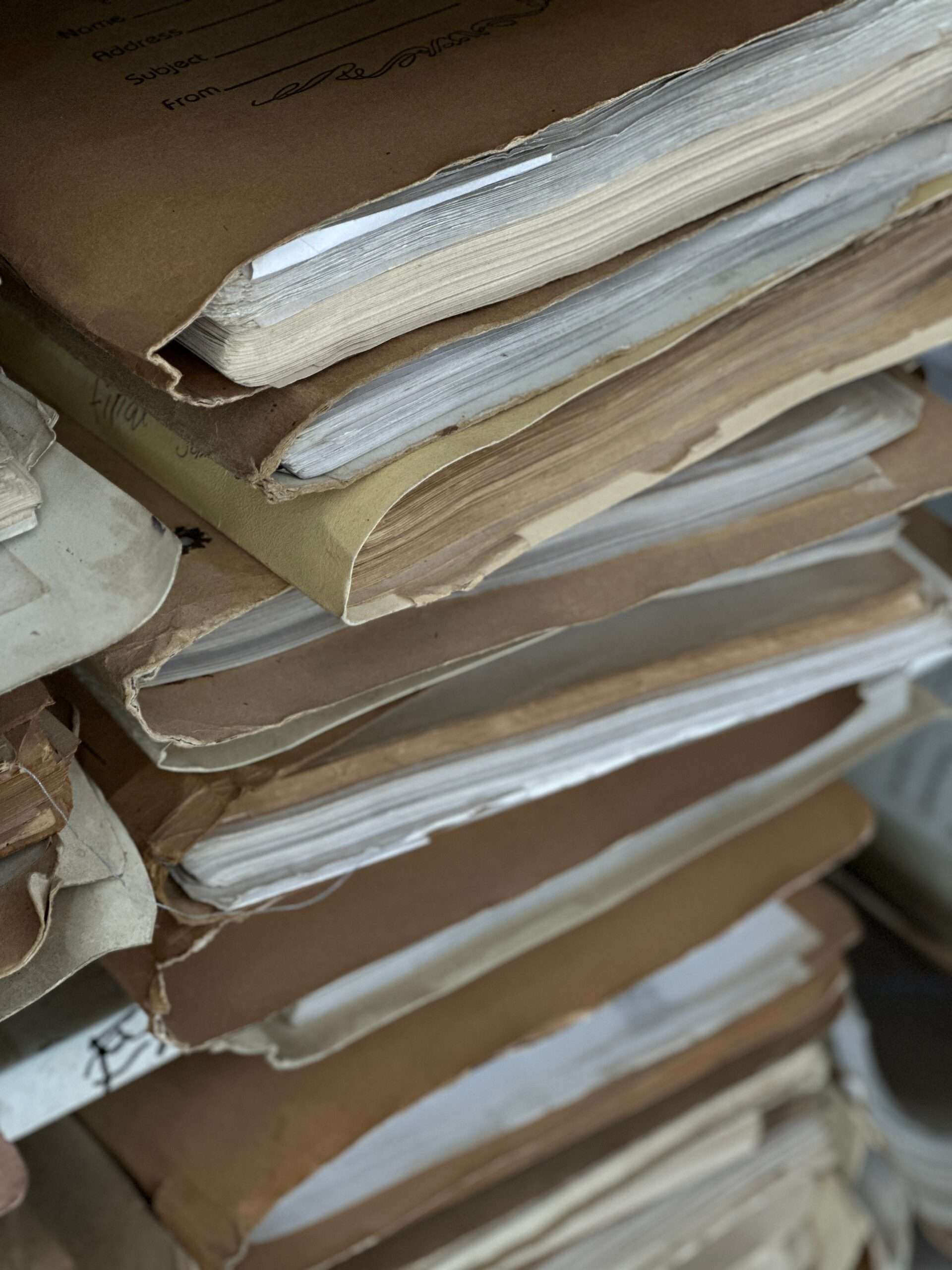
The IRS Has Tips for Rebuilding Records After a Disaster. They Work the Rest of the Time, Too
It’s storm season, and the IRS is reminding taxpayers how to reconstruct tax records lost in a disaster. Those records can be critical for filing returns, claiming losses, applying for federal assistance, or filing an insurance claim.
But you don’t need a natural disaster to lose your tax records. That can be a problem if you’re trying to file an old return, respond to an IRS notice, or establish the basis of property you bought or inherited years ago.
Fortunately, many of the same techniques the IRS recommends after a disaster can help you rebuild your tax records anytime.
Start With The IRS
If you’re missing tax records, one of the easiest places to start is the IRS itself.
The IRS offers several types of transcripts, depending on what you need:
- Tax return transcript: Shows most of the information from your originally filed return.
- Tax account transcript: Shows basic return information and account activity, including payments and subsequent changes.
- Record of account transcript: Combines information from the return and the account transcripts.
- Wage and income transcript: Provides information reported to the IRS on Forms W-2, 1099, 1098, and similar forms—especially useful for reconstructing an unfiled return.
- Verification of non-filing letter: Confirms that the IRS has not processed a Form 1040-series return on file, but it does not mean you weren’t required to file.
You can access transcripts through your IRS Individual Online Account. You can also order certain transcripts by mail or phone (800.908.9946)—expect to wait between 5 and 10 calendar days for delivery. In addition, you can request them using Form 4506-T, Request for Transcript of Tax Return. If you need an actual copy of a previously filed tax return rather than a transcript, you can request one using Form 4506, Request for Copy of Tax Return.
There are limitations. For example, a wage and income transcript includes only information returns filed with the IRS, so it may not reflect everything issued to you. Importantly, W-2 transcript information also does not include state and local information.
Go Back To The Source
The IRS isn’t your only option. You can also go back to the source of the information.
If you’re missing a W-2, start with your employer. Missing a 1099? Try the payer. Banks, brokerage firms, mortgage lenders, payroll companies, and other businesses may be able to provide copies of statements or tax documents.
If you need records for a home purchase, for example, contact your title company, escrow company, or bank involved in the transaction. A real estate broker may also have records.
Depending on what you’re trying to reconstruct, useful records might be in the files of your former accountant, tax preparer, lawyer, financial adviser, or insurance agent.
While rules for retaining records vary from business to business (and state to state), it can’t hurt to ask.
Your Bank And Credit Card Statements Can Help
Bank and credit card records can also be useful.
Businesses can use them to identify payments to contractors, utilities, and other vendors. Bank deposits may also help reconstruct business receipts when more complete records have been lost.
For individuals, those records might help reconstruct charitable contributions, medical expenses, estimated tax payments, property improvements, or other transactions.
But be careful: proof that you paid something isn’t necessarily proof of why you paid it. For example, a credit card statement showing a $5,000 charge to a contractor establishes that a transaction occurred. It doesn’t necessarily establish that the $5,000 was spent on a home improvement that should be added to your basis.
That’s where other evidence becomes useful. An invoice, contract, building permit, email exchange, photograph, or other document may help establish what the payment was actually for.
Don’t be afraid to gather lots of documentation (I firmly believe that, for this purpose, there’s no such thing as too much information). Reconstruction is often less about finding a single replacement document and more about assembling several pieces of evidence that tell the same story.
Reconstructing The Basis Of Property
Basis can be one of the trickiest things to reconstruct because taxpayers may need records decades after a transaction.
Generally, basis starts with what you paid for property, though different rules apply to property acquired by gift or inheritance. Basis can also change over time.
For a home, for example, certain improvements can increase basis. That matters when the property is sold because basis determines gain or loss.
When you don’t have receipts, closing documents may be available from a title or escrow company, a lender, an attorney, or another party involved in the purchase. Contractors may have old invoices or account histories. Bank and credit card records can help establish payments. Building permits can help establish when major work was done. Photographs may show additions or renovations. Insurance records and old appraisals can also provide clues.
The IRS suggests county assessor records as another possible source of historical property information. But be careful: a property tax assessment is not necessarily the same as federal tax basis or fair market value.
What If You Haven’t Filed A Tax Return In Years?
If you’re trying to reconstruct records for an unfiled year, start by determining what information is available from the IRS. A wage and income transcript can identify Forms W-2, 1099, 1098, and other information returns that were reported to the agency.
From there, identify what’s missing. Remember: information reported to the IRS reflects what someone else told the government. It doesn’t necessarily tell you everything you need to prepare an accurate return.
For example, a Form 1099 may report transaction proceeds without showing your adjusted basis. Or an information return may be incorrect.
You want to reconstruct the return, not simply copy the transcript.
Got An IRS Notice? Reconstruct Before You Agree
The same principle applies when an IRS notice arrives. If you receive one for a year you barely remember, it can be tempting to look at the proposed tax and assume the IRS has the right number.
Get a transcript of the return if you don’t have a copy. Review the information third parties reported to the IRS. Pull bank, brokerage, or other records as needed. Check basis and payments. Then compare what you originally reported, what third parties reported, and what the IRS is proposing.
Figure that out before you respond. And don’t ignore the response date on the notice while you’re hunting for records. IRS notices generally include instructions for responding, and taxpayers who need additional time should follow the procedures provided for their particular notice.
What If The Original Records Simply Don’t Exist?
Federal tax law generally requires taxpayers to keep records sufficient to substantiate items reported on a return, and some expenses are subject to particularly strict substantiation requirements.
But tax records don’t necessarily have to take a particular form. The IRS recognizes a variety of supporting documents, including receipts, invoices, canceled checks, account statements, sales slips, deposit records, and other evidence.
There’s also a long history in tax law of dealing with imperfect records. In the 1930 case Cohan v. Commissioner, involving songwriter and entertainer George M. Cohan (who wrote “Over There” and “Give My Regards to Broadway,” among others), the court rejected the idea that a taxpayer who clearly incurred deductible expenses should receive no deduction simply because the exact amount couldn’t be established. Instead, the court allowed an approximation when there was a sufficient evidentiary basis for making one. That’s sometimes referred to as the Cohan rule.
(Fun fact: Cohan estimated that, for the tax periods in question, he had spent $55,000 on travel and entertainment—more than $1 million in today’s dollars—without keeping records of the expenses. So, this wasn’t a case of somebody losing a few receipts.)
But that’s not a license to be careless or make up numbers. There must be evidence that deductible expenses were actually incurred and a reasonable basis for estimating the amount. And Congress has imposed stricter substantiation requirements for certain expenses, limiting the usefulness of Cohan. The better the evidence you can reconstruct, the stronger your position will be.
And Once You Reconstruct It, Keep It
Finally, if you’ve gone to the trouble of reconstructing something difficult, don’t make yourself—or your family—do it again.
Save digital copies of the supporting documents. The IRS has accepted scanned and electronic records as valid documentation since 1997. Today, IRS guidance allows taxpayers to maintain records electronically, provided the records meet requirements to ensure they remain accurate, accessible, legible, and reproducible.
Keep copies somewhere other than on a single computer in your house. For complicated items, keep a brief explanation of how you arrived at the final number. That can be particularly valuable for basis.
What Comes Next
The IRS issued its latest record-reconstruction reminder because it’s disaster season (something I know about firsthand from growing up on the North Carolina coast). But you don’t need a hurricane to lose your tax records, and you don’t need perfect records to start rebuilding them.
Sometimes, you just have to work backward from what remains.




Want more Taxgirl?
Get tax news, explainers, deadlines, and more delivered straight to your inbox.
Subscribe →
The line about not needing a natural disaster to lose your records is the part that lands with the people we work with. We run a job board for traveling trades workers, and a welder who worked four states last year is rebuilding a mileage log every spring out of gas receipts and text messages, no hurricane required. Your point about assembling several pieces of evidence that tell the same story is exactly how those get settled – the bank statement, the assignment dates and the lodging folio all pointing the same direction. We ended up building a free tool for logging mileage and lodging while the year is still happening, because putting it back together in April is always the harder job. The transcript list is going in front of a few of them this week.