
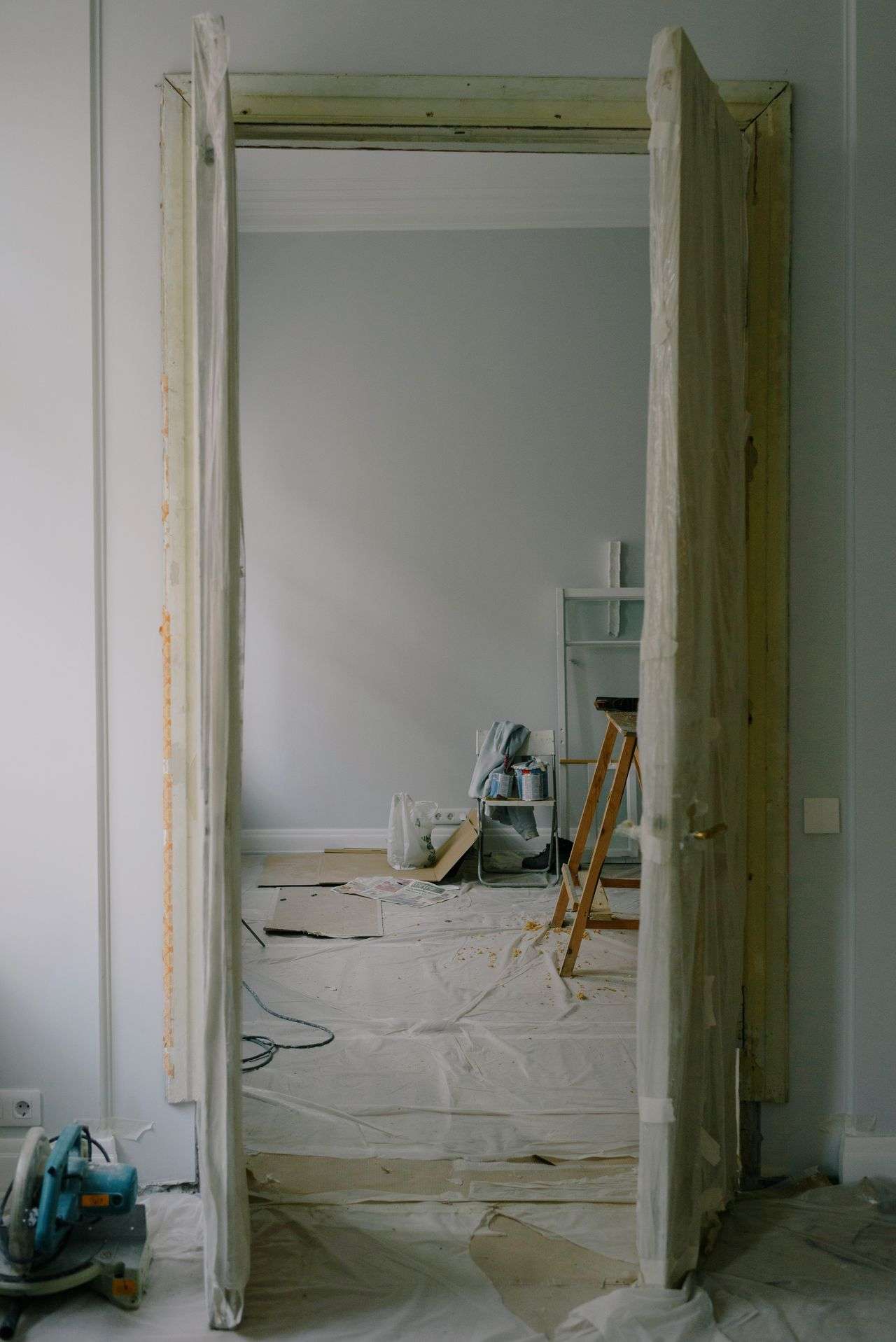
You Be The Tax Judge: The Home Office Makeover Verdict
A bigger home office, new carpeting, heated floors, and a few other improvements might make working from home more pleasant. But do they make the renovation costs tax-deductible?
Last week, I asked you to weigh in on a dispute involving a California couple who claimed nearly $25,000 in home-office deductions after improving their home. The IRS challenged the deductions, and the case landed in Tax Court.
So, who was right?
The answer is B: No. The taxpayers weren’t entitled to deduct the renovation expenses as claimed.
What The Tax Court Decided
In Fontayne v. Commissioner, T.C. Summary Opinion 2013-54, Special Trial Judge John F. Dean considered several issues involving the home-office deductions claimed by Jean Marie and Yves Raymond Fontayne.
The couple claimed a $24,728 home-office deduction on their 2008 federal income tax return. Their claimed expenses included costs associated with moving a wall, replacing carpeting, installing underfloor heating, and other improvements.
The court concluded that the renovation expenses were capital expenditures rather than currently deductible repairs or maintenance. Under section 263 of the Tax Code, taxpayers generally cannot deduct the cost of permanent improvements that add value to property or extend its useful life. Those costs must instead be capitalized.
Capitalization is generally less appealing than an immediate tax deduction. Instead of writing off the entire cost of the improvements in one year, you generally add those costs to the property’s tax basis and, if the improvements qualify, deduct the business-related portion gradually over several years through depreciation.
The Fontaynes argued that some of the work constituted repairs. For example, Yves damaged a wall while removing bookcases, and the couple subsequently replaced it. But the court wasn’t persuaded that removing and replacing the wall was simply a repair.
The same reasoning applied to the carpeting, heating system, central vacuum system, and bathroom tile. The court found that these improvements added value to the home or extended the property’s useful life. As a result, they couldn’t deduct the costs as current home-office expenses.
The Employment Change Made A Difference
There was another problem with the couple’s deductions: timing. Jean Marie worked as a part-time independent contractor for Vitesse Semiconductor Sales Corp. from January through July 2008. During that period, the IRS agreed she maintained a qualifying home office. In July, however, she became a full-time employee.
Her employer provided office space and required her to work on-site at least two days each week. Although she was permitted to work from home up to three days per week, the court found that arrangement was at her own request and for her own convenience. Her supervisor described the arrangement as beneficial to Vitesse, but the couple offered no evidence that the company required or directed her to work from home.
Under section 280A, an employee claiming a home-office deduction must satisfy an additional requirement: the home office must be maintained for the convenience of the employer. Because the court found that requirement wasn’t satisfied, the couple couldn’t claim home-office expenses for August through December 2008.
The renovation expenses were incurred in November and December, after Jean Marie had become an employee and the home office no longer qualified for the deduction. Even apart from the capital improvement issue, the timing worked against the taxpayers.
How Big Was The Home Office?
The court also had to sort out a disagreement over the size of the workspace.
The Fontaynes originally claimed that 554 square feet of their approximately 3,100-square-foot home was used for business, or nearly 18%. At trial, they acknowledged that the figure was overstated and reduced their claim to 307.5 square feet.
The IRS examiner, meanwhile, estimated that Jean Marie needed only 99 square feet to perform her work. The court rejected both calculations.
It found that the taxpayers had improperly included areas such as a bathroom and closet that weren’t used exclusively and regularly for business. For example, the closet contained a safe used to store personal items. But the court also found the IRS examiner’s 99-square-foot estimate arbitrary. Based on the available evidence, the court determined that the qualifying office space measured 180 square feet, or approximately 5.8% of the home.
So the IRS didn’t win every argument. The court accepted that Jean Marie maintained a qualifying home office while she was an independent contractor, and it allowed a larger workspace than the examiner estimated. That didn’t save the renovation deductions.
And There Was A Penalty
The IRS determined a $10,414 tax deficiency and a $2,082.80 accuracy-related penalty under section 6662. The court upheld the penalty.
The court found that the Fontaynes had substantially understated their income tax liability and had claimed expenses that were personal or otherwise not deductible.
The taxpayers also failed to establish reasonable cause and good faith sufficient to avoid the penalty. Interestingly, they claimed a $500 tax preparation fee, even though their returns were marked as self-prepared. The IRS allowed the $500 deduction, but the court noted that the couple offered no explanation about who, if anyone, prepared their returns or what steps they had taken to determine their correct tax liability.
What Can You Learn From This Case?
There are several takeaways.
First, using part of your home for business doesn’t automatically make every expense for that space deductible. Repairs and capital improvements are treated differently for federal income tax purposes.
Second, employment status matters. The rules governing home-office deductions can change when a taxpayer moves from self-employment to employment. For the year at issue, an employee’s home office also had to be maintained for the employer’s convenience.
Third, square footage is important. A taxpayer must establish which portions of the home are used regularly and exclusively for business. A room’s proximity to the office doesn’t necessarily make it part of the office.
Finally, documentation matters. I’ll die on the “keep great records” hill, and here, the court also rejected $6,654 in claimed indirect repair and maintenance expenses because the taxpayers hadn’t adequately substantiated them.
Today’s Law
One important caveat: The Fontaynes’ case concerned the rules that applied to their 2008 tax return. Those rules have changed significantly.
Before 2018, employees who met the home-office requirements could deduct qualifying expenses as miscellaneous itemized deductions, but only to the extent that those expenses, combined with other eligible deductions, exceeded 2% of their adjusted gross income.
The Tax Cuts and Jobs Act of 2017 (TCJA) suspended those deductions for tax years 2018 through 2025. The One Big Beautiful Bill Act (OBBBA), signed into law in 2025, made that change permanent beginning in 2026. That means most employees still cannot deduct unreimbursed home-office expenses on their federal income tax returns.
Self-employed taxpayers, however, may still qualify for the home-office deduction if they meet the applicable requirements, including regular and exclusive business use.
While the law has changed, the larger lesson hasn’t: A home improvement doesn’t become a deductible business expense simply because it makes working from home easier. And sometimes, the date you make the improvement matters just as much as what you improve.
A Note On Precedent
The case is Fontayne v. Commissioner, T.C. Summary Opinion 2013-54 (July 3, 2013). The Tax Court issued the decision under its small tax case procedures, which provide a simpler, less formal way to resolve disputes involving relatively small amounts of tax. Decisions in these cases are not precedential, so other taxpayers generally cannot rely on them as binding legal authority. Still, they can offer useful insight into how the Tax Court approaches common tax disputes—and why the details matter.




Want more Taxgirl?
Get tax news, explainers, deadlines, and more delivered straight to your inbox.
Subscribe →