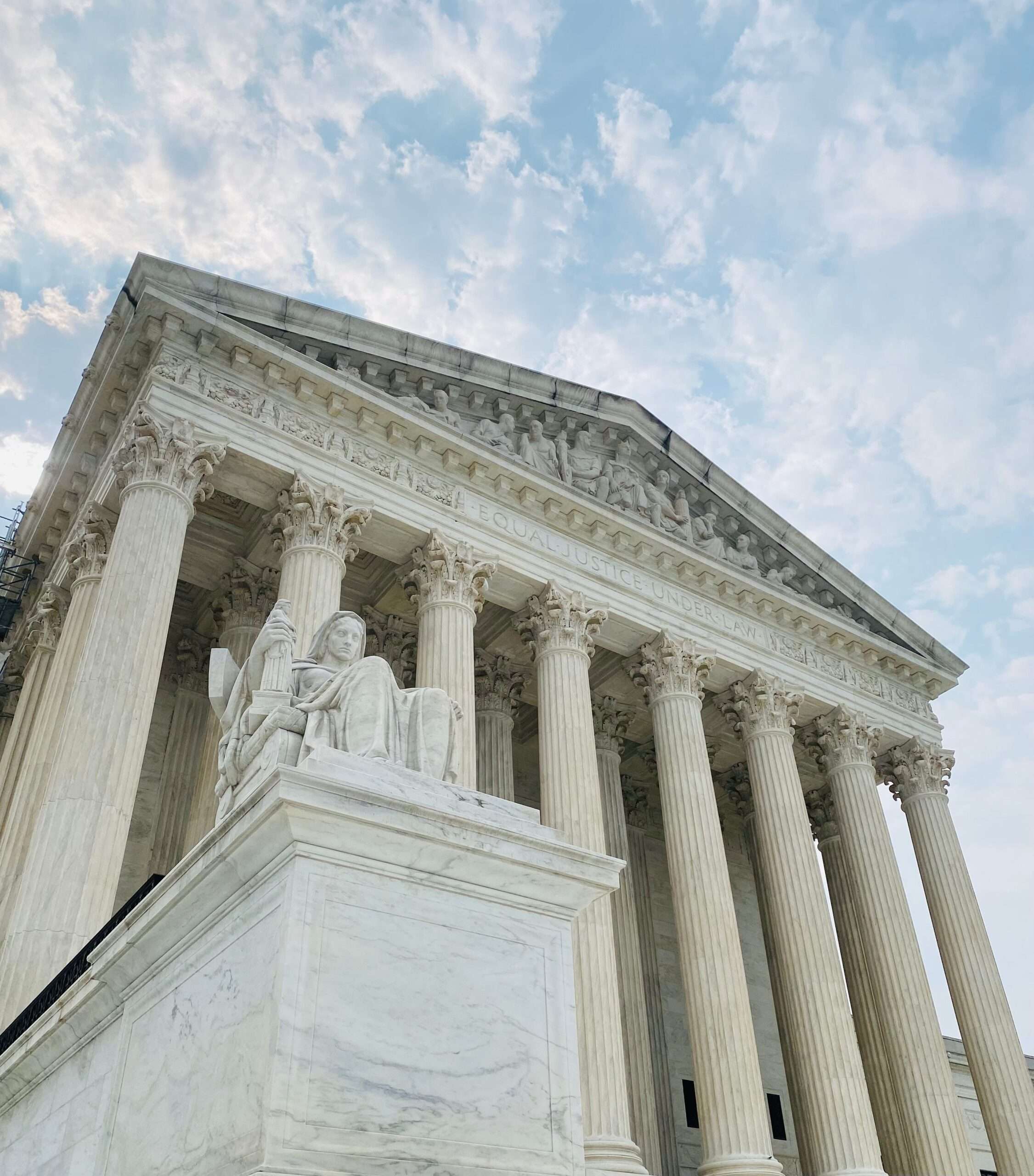

A Primer on How a Case Gets to the Supreme Court
The Supreme Court of the United States – sometimes called SCOTUS – has been in the news a lot lately. As a result, one of my most popular questions is: How does a case get to the Supreme Court?
I wanted to tackle that question, but in the context I know best: tax. Follows is a primer on how a tax case gets to SCOTUS. The process is more or less the same for all cases, but I’m focusing on tax because, well, you know.
First, a couple of quick disclaimers. I am not a litigator. I am not a constitutional lawyer. I am a tax lawyer. That means that this discussion isn’t the result of years practicing law before SCOTUS: I have never personally appeared before SCOTUS. Instead, this is the equivalent of many years of tax practice, reading cases, and an admittedly painful year of Con Law in law school (with apologies to my professor).
How A Tax Matter Gets To Court
When it comes to federal tax matters, you typically begin hammering out disputes with the Internal Revenue Service (IRS) directly. If you can’t reach an agreement, you have the opportunity to take your case to court. You have a few options, depending on the issue, timing, and your resources:
- One option is Tax Court. The Tax Court can hear tax matters, including requests for abatement of interest (since that’s not discretionary), review of collection actions, and determination of worker classification. The Tax Court is physically located in Washington, D.C., where you’ll file your petition and other documents; fortunately, Tax Court judges travel across the country for trials. But most Tax Court cases don’t make it to trial: they tend to settle. If a case does go to trial, you’ll have an opportunity to have your say, as will the government, and the judge will issue an opinion. (You can find out more about Tax Court here.)
- Taxpayers can also sue in U.S. District Court. You’ve likely seen and remembered references to District Courts since the names relate to geography. For example, I’m located in the Pennsylvania Eastern District; there’s also a Pennsylvania Middle District and a Pennsylvania Western District. Most states have two or three districts except for California and New York, which have four each. To file a tax case in District Court, you have to pay the amount in dispute and sue for a refund. That’s why many taxpayers prefer Tax Court (you don’t have to pay in advance to go to Tax Court).
- A third, and lesser-known option, is the United States Court of Federal Claims. The Court of Federal Claims is authorized to hear primarily money claims related to constitutional issues, federal statutes, executive regulations, or federal contracts. For tax purposes, that means many refund suits or complex tax cases. Since you have to pay before you can file suit – as you do with the U.S. District Court – this option isn’t as popular for taxpayers with limited resources.
These three courts are sometimes called trial courts. Even though they may have impressive names, they are lower courts, and you can appeal their decisions (with some exceptions, like small cases under $50,000 heard in Tax Court, also called S cases, which may not be appealed).
Appealing A Tax Decision
You would appeal a case to the U.S. Court of Appeals. There are 13 Circuits in the Court of Appeals (cleverly named 1st, 2nd, and so on, through the 11th, plus the District of Columbia, which hears many agency cases); those courts hear cases from the Tax Court and the District Courts. The last circuit, the U.S. Court of Appeals for the Federal Circuit, hears cases from the U.S. Court of Federal Claims.
A popular misconception is that an appeal is a do-over. That’s not how it works. Appeals aren’t new trials. Appeals typically review decisions from lower courts based on arguments that they made errors in procedure or in interpreting the law. You are generally barred from raising new arguments or issues on appeal.
Even if mistakes were made in the lower court, that doesn’t mean that the ruling will be reversed: it depends on the nature of the error. If it were a harmless error – meaning one that didn’t prejudice your rights to a fair trial – the court may let the decision stand. In contrast, an error that is considered harmful may be grounds for reversal – but a reversal doesn’t mean end game: the appellate court may send the case back down and order the trial court to take further action.
Appealing To The Supreme Court
The next stop after federal appeals courts is the U.S. Supreme Court. And like its name suggests, there is no higher court. While you generally have the right to appeal a case from a lower court to an appellate court, you don’t have the right to be heard at the Supreme Court.
The Supreme Court has what is called original jurisdiction over certain kinds of cases. Those cases, which are defined by statute (28 U.S.C. §1251), go straight to the Supreme Court: they don’t have to wind their way up the lower and appellate court road. And no other court can hear these kinds of cases. An example of a case with original jurisdiction would be a dispute between the states.
That said, most cases don’t have original jurisdiction. So, there’s a process for hearing cases that have already been heard in another court and now want a shot at SCOTUS.
Certiorari
To be heard, the losing party must file a petition seeking a review of the case: you’re petitioning for a writ of certiorari (that’s Latin meaning a written order “to be more fully informed” ). Typically, you file these in response to an appellate court decision. Less common, but still an option, is to appeal a decision by one of the state supreme courts (it’s rare that SCOTUS will consider one of these unless it involves a constitutional question).
If SCOTUS decides to hear the matter, it’s called a grant of certiorari (by practice, at least four justices must vote to hear the case to be granted cert). Usually, SCOTUS grants cert when the case is of considerable importance or involves a circuit split. A circuit split happens when appellate courts disagree on a matter of federal law and reach different conclusions about its application. SCOTUS may grant cert to resolve the issue for the sake of consistency.
If SCOTUS turns the petition down, it’s referred to as certiorari denied, denied certiorari, or denied cert (for the cool and brief among us – as well as those, like me, who can’t pronounce Latin). A denial does not necessarily mean SCOTUS agrees with the appellate court’s findings; it simply means the appellate decision will stand.
Most cases never reach SCOTUS. The Court receives approximately 7,000-8,000 petitions for a writ of certiorari each term (terms begin, by law, on the first Monday in October and last until the first Monday in October, though it typically recesses in June). The Court only grants and hears oral argument in about 80 cases. You have a better chance of getting audited by the IRS – or getting into Harvard.
How SCOTUS Works
You’d think from the movies that arguing before SCOTUS would be exciting. And they are in the lawyer-and-other-geeks-among-us sense. But remember: most cases involve reviewing a decision from a lower court. That means that you typically aren’t going to see a full courtroom proceeding. You will, however, likely see a lot of briefs: both parties file written briefs with the Court, laying out arguments of why their side should win.
Sometimes, folks who have an interest in a case – but aren’t a party to the litigation – also want to be heard. In that event, the Court allows those non-parties to also file briefs. These are referred to as amicus briefs written from amicus curiae (even more Latin, this time meaning “friend of the court”).
After the briefs are filed, the justices hear oral arguments. They are typically short, and no witnesses testify. If you’ve ever watched one of the hearings, you’ll note that the justices often ask questions during the hearings: that’s to help them clarify any outstanding issues they may have after reviewing those briefs. Once they’ve heard the arguments, they meet as a group to decide the outcome of the case.
SCOTUS Decisions
SCOTUS decisions are made public by a written opinion. The Court used to issue separate opinions, a throwback to the English traditions. But Chief Justice John Marshall introduced the practice used today of issuing a single majority opinion to explain the Court’s decision.
A justice may also write a concurring opinion, which means that he or she agrees with the outcome of the case but differs in either the reasoning or approach of one or more parts of the decision.
A dissenting opinion, by contrast, means that a justice disagrees with the outcome of the case and wants to explain why. Sometimes they do this with the hope that the dissent will lead to a change in the law in the future.
A good example of how this works can be found in Olmstead v. United States, where Justice Brandeis dissented after a deeply divided court opinion:
Crime is contagious. If the Government becomes a lawbreaker, it breeds contempt for law; it invites every man to become a law unto himself; it invites anarchy. To declare that, in the administration of the criminal law, the end justifies the means — to declare that the Government may commit crimes in order to secure the conviction of a private criminal — would bring terrible retribution. Against that pernicious doctrine this Court should resolutely set its face.
Chief Justice Brandeis, Olmstead v. United States
Olmstead was a criminal case – not a tax case – involving wiretapping. But Brandeis’ passionate dissent became quite famous – and nearly forty years later, SCOTUS declared warrantless wiretapping unconstitutional in Katz v. United States.
And, of course, it goes without saying that Ruth Bader Ginsburg was notorious for her dissents, as was her good friend and colleague, Antonin Scalia.
Final. Sort Of.
Supreme Court cases are the last stop. There’s nowhere else to go.
That doesn’t mean that it’s always the last word. As you can tell, issues may be revisited in future years because circumstances or the law change, requiring another look (the argument over Obamacare after the elimination of the mandate penalty is a good example).
But it does mean that a case may not be revisited simply because you don’t like the outcome.
Tax Cases At SCOTUS
Some of the most famous tax cases that made it to the Supreme Court include:
- McCulloch v. Maryland (1819)
- Pollock v. Farmers’ Loan & Trust Company (Rehearing) (1895)
- Allen v. Wright (1984)
- Quill Corp. v. North Dakota (1992)
- South Dakota v. Wayfair, Inc. (2018)
More Info
For information about what kinds of cases are currently before SCOTUS, you can search the Court’s docket on its website. For information and analysis about SCOTUS cases, check out the excellent SCOTUSblog.