

IRS Announces 2027 Tax Brackets, Standard Deductions And More
The Internal Revenue Service (IRS) has announced its annual inflation adjustments for the 2027 tax year, including updated federal income tax brackets, standard deduction amounts, and dozens of other tax provisions.
The adjustments affect nearly 70 tax provisions, including those related to families, education, health care, businesses, and estate planning. The changes largely reflect inflation, though some also incorporate provisions of the tax law commonly called the One Big Beautiful Bill Act (OBBBA), which the IRS refers to as the Working Families Tax Cuts.
These are the applicable numbers for tax year 2027—in other words, beginning January 1, 2027. They are NOT the numbers and rates that you’ll use to prepare your 2026 tax returns in 2027. These are the numbers that you’ll generally use to prepare your 2027 tax returns in 2028.
Here are the highlights.
Tax Brackets
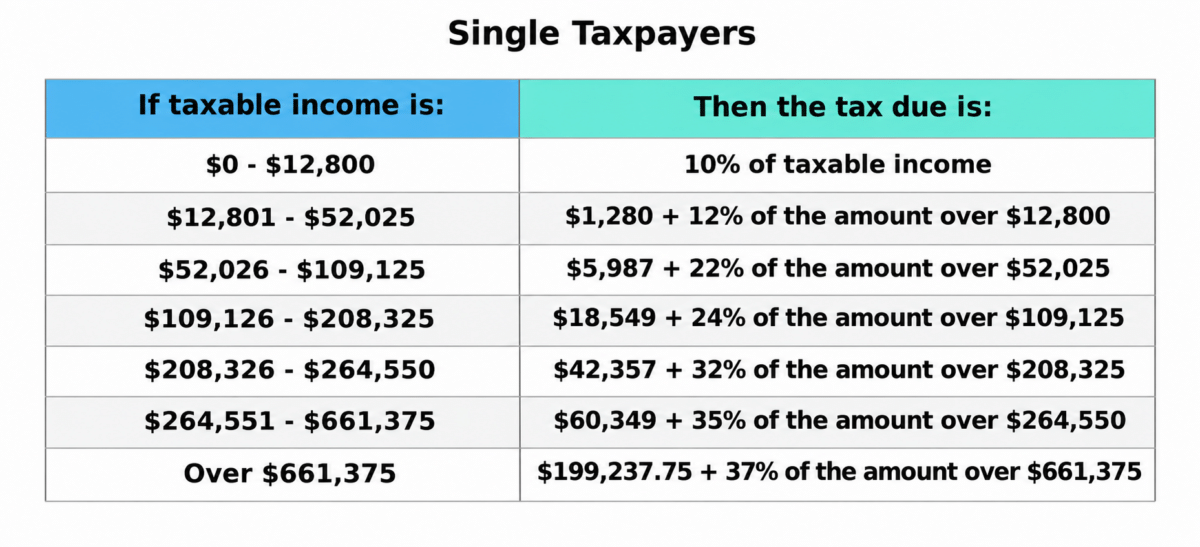
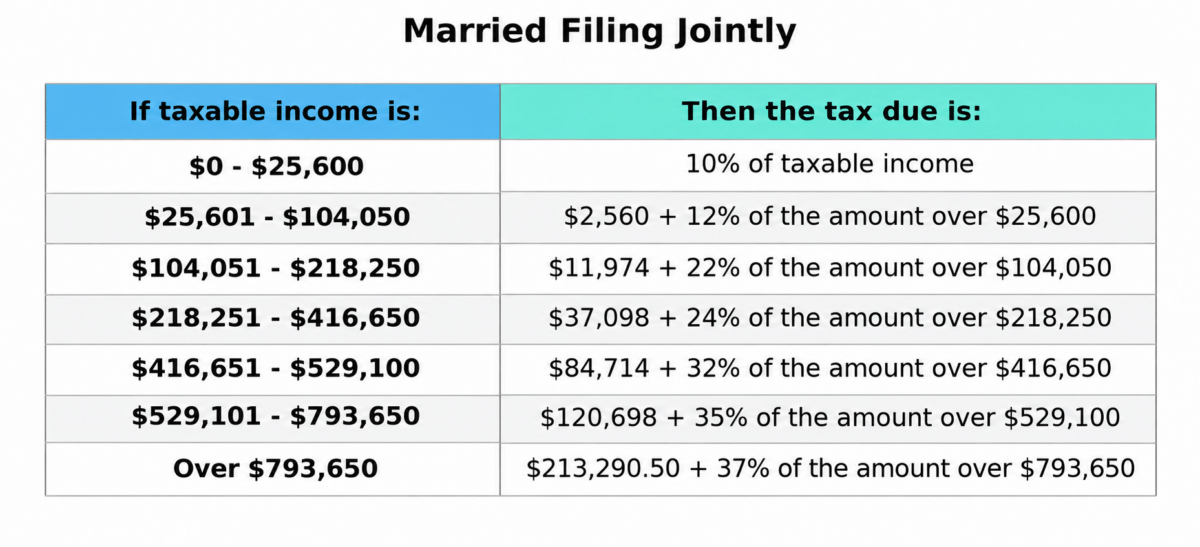
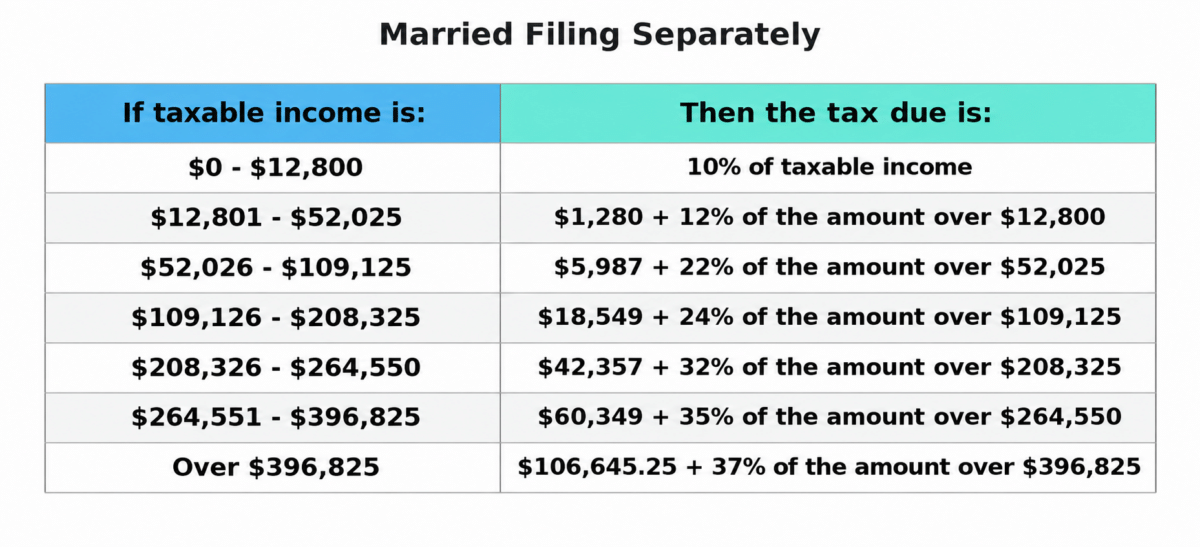
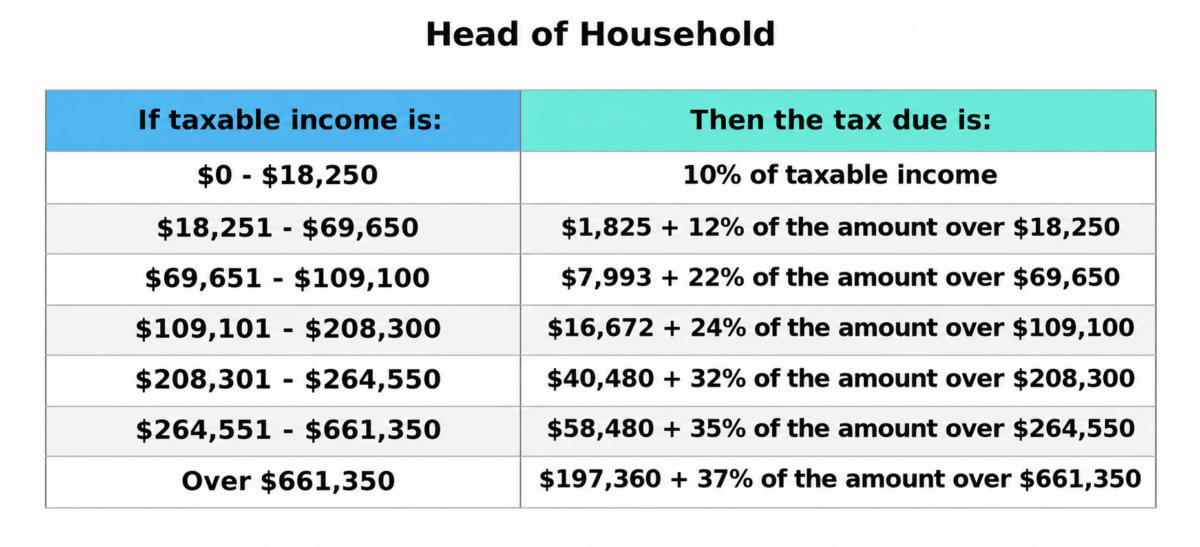
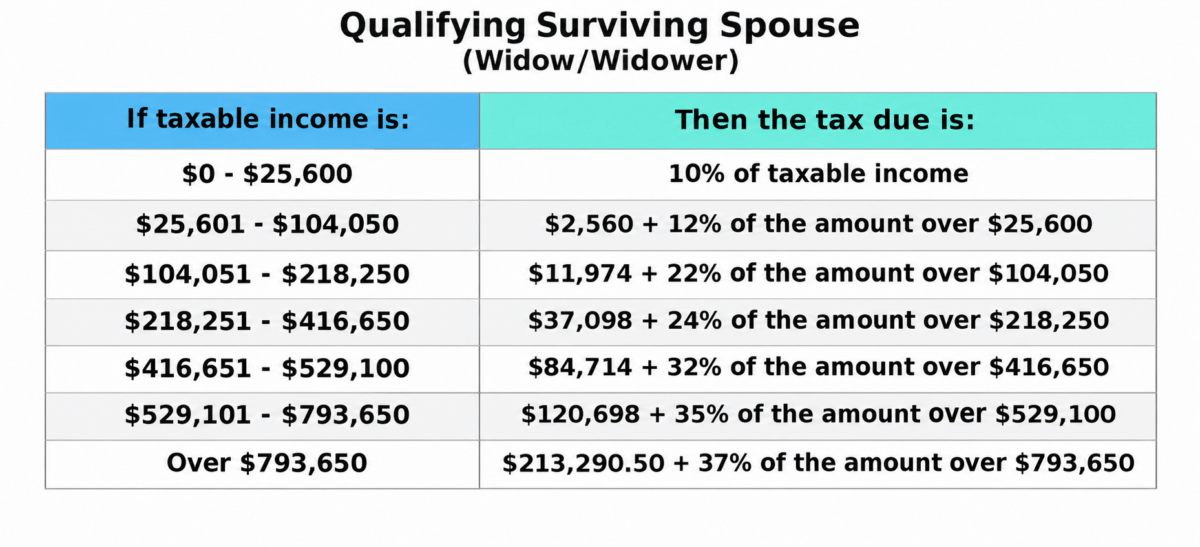
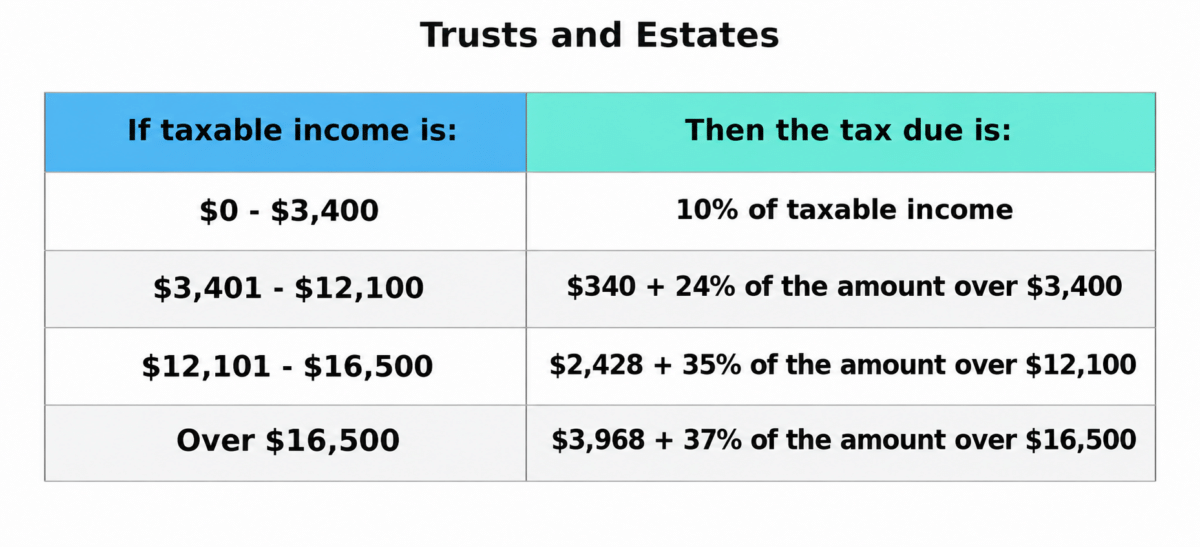
The big news is, of course, the tax brackets. The seven federal income tax rates remain unchanged for 2027: 10%, 12%, 22%, 24%, 32%, 35%, and 37%. But the income thresholds for those brackets have increased to account for inflation—that means you can generally earn more before moving into a higher marginal tax bracket.
Remember that the federal income tax system is progressive. Just because you’re in the 24% tax bracket doesn’t mean that all of your income is taxed at 24%—only the portion of taxable income that falls within that bracket is subject to that rate.
Here’s what the brackets look like for 2027.
Standard Deductions
The standard deduction also increases for 2027. The standard deduction is a fixed amount that taxpayers can subtract from their income to reduce the amount subject to federal income tax. Taxpayers generally choose between claiming the standard deduction and itemizing their deductions.
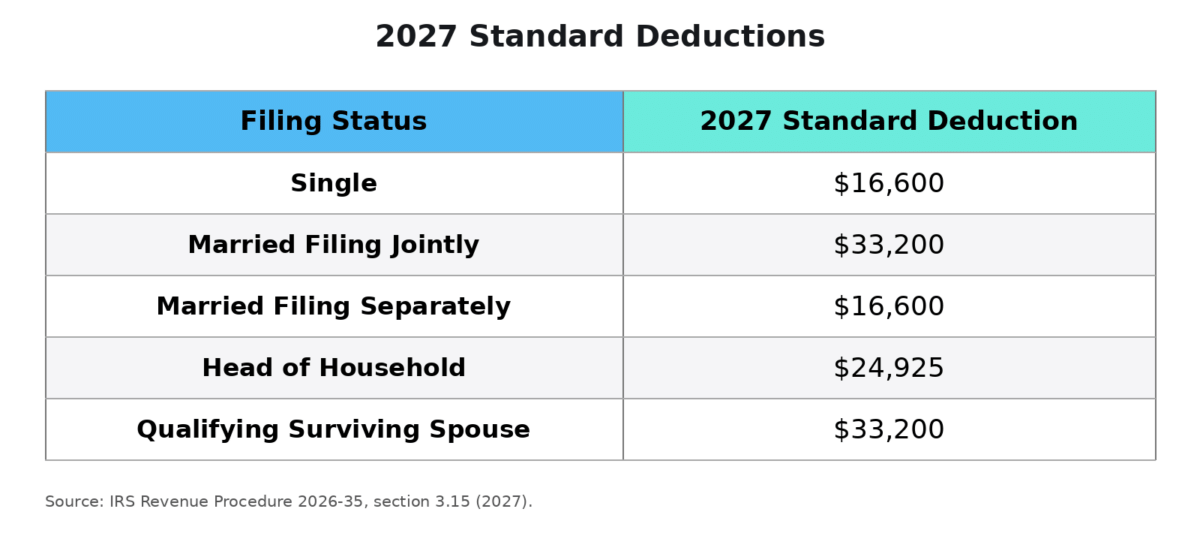
The higher standard deduction amounts were originally scheduled to expire after 2025, but OBBBA made them permanent.
Additional Standard Deduction For Age Or Blindness. For 2027, taxpayers who are age 65 or older or blind may qualify for an additional standard deduction of $1,700. That amount increases to $2,100 for taxpayers who are unmarried and not qualifying surviving spouses. Taxpayers who are both age 65 or older and blind may qualify for both additional amounts.
Standard Deduction For Dependents. For 2027, the standard deduction for someone who can be claimed as a dependent by another taxpayer is generally limited to the greater of $1,400 or the dependent’s earned income plus $500. However, the deduction cannot exceed the regular standard deduction for the dependent’s filing status. Additional amounts may apply if the dependent is age 65 or older or blind.
Personal Exemptions
The personal exemption amount remains $0 in 2027. The Tax Cuts and Jobs Act (TCJA) eliminated personal exemptions for tax years 2018 through 2025, and OBBBA made that elimination permanent.
Itemized Deductions
The old overall limitation on itemized deductions, commonly called the Pease limitation after former Rep. Don Pease (D-OH), was eliminated beginning in 2018. OBBBA made that elimination permanent, although taxpayers in the highest federal income tax bracket are subject to a limitation on the tax benefit of certain itemized deductions. That limitation generally reduces the maximum tax benefit of affected itemized deductions for taxpayers in the 37% bracket to 35 cents on the dollar.
Capital Gains
Long-term capital gains are generally taxed at preferential federal income tax rates of 0%, 15%, or 20%, depending on taxable income and filing status. Those rates remain unchanged for 2027, although the income thresholds are adjusted for inflation. Taxable income above the applicable 15% threshold generally falls into the 20% capital gains bracket.
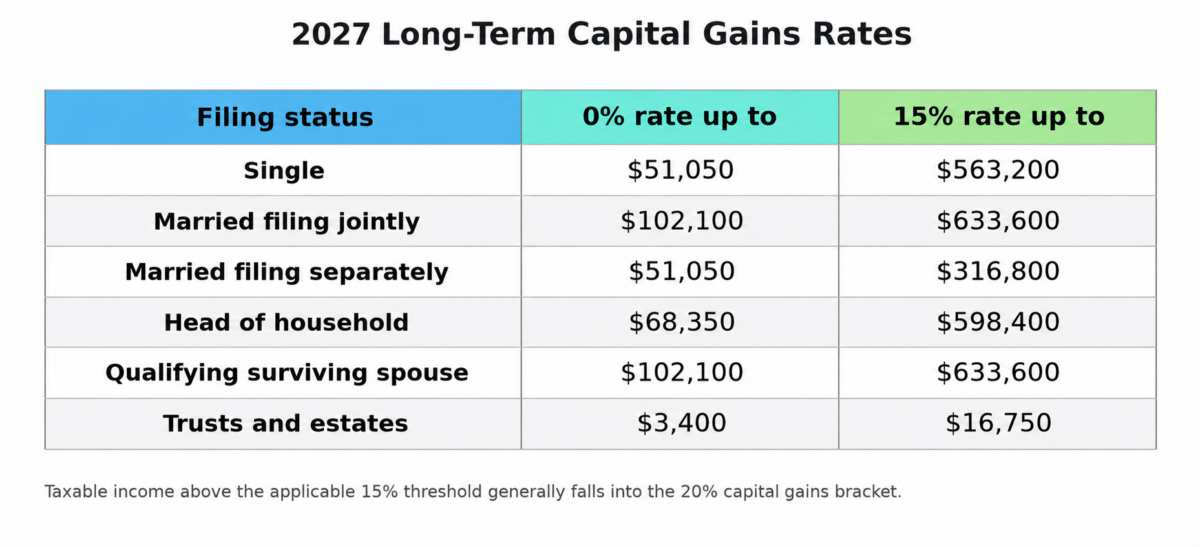
Short-term capital gains are generally subject to ordinary income tax rates. Special rates may apply to certain assets, including collectibles, and an additional 3.8% net investment income tax may apply to some taxpayers.
Family-Related Tax Updates
ABLE Accounts. For 2027, the annual contribution limit for Achieving a Better Life Experience (ABLE) accounts increases to $20,000, up from $19,000 in 2026. ABLE accounts allow eligible individuals with disabilities to save and invest money for qualified disability expenses without jeopardizing certain means-tested government benefits. Eligible working beneficiaries may be able to contribute additional amounts, subject to restrictions.
Additional Deduction For Seniors. Under OBBBA, qualifying individuals age 65 and older may claim an additional deduction of up to $6,000 per eligible person ($12,000 for a married couple if both qualify). Although the provision is sometimes described as “no tax on Social Security,” it does not change how Social Security benefits are taxed. The deduction begins phasing out when modified adjusted gross income exceeds $75,000 ($150,000 for married couples filing jointly), with a 6% reduction based on income exceeding those thresholds. The deduction is available through 2028 and may be claimed by eligible taxpayers whether they itemize deductions or take the standard deduction.
Adoption Credit. For 2027, the maximum adoption credit increases to $18,250, up from $17,670 in 2026. Of that amount, up to $5,280 may be refundable. For 2027, the credit begins phasing out when modified AGI exceeds $273,680 and is fully phased out at $313,680. The credit is generally based on qualified adoption expenses, subject to special rules for certain adoptions, and income limitations apply.
Child Tax Credit. The maximum child tax credit increases to $2,300 per qualifying child for 2027, up from $2,200 in 2026. The maximum refundable portion of the credit also increases by $100, from $1,700 to $1,800. Income limitations and other eligibility requirements continue to apply.
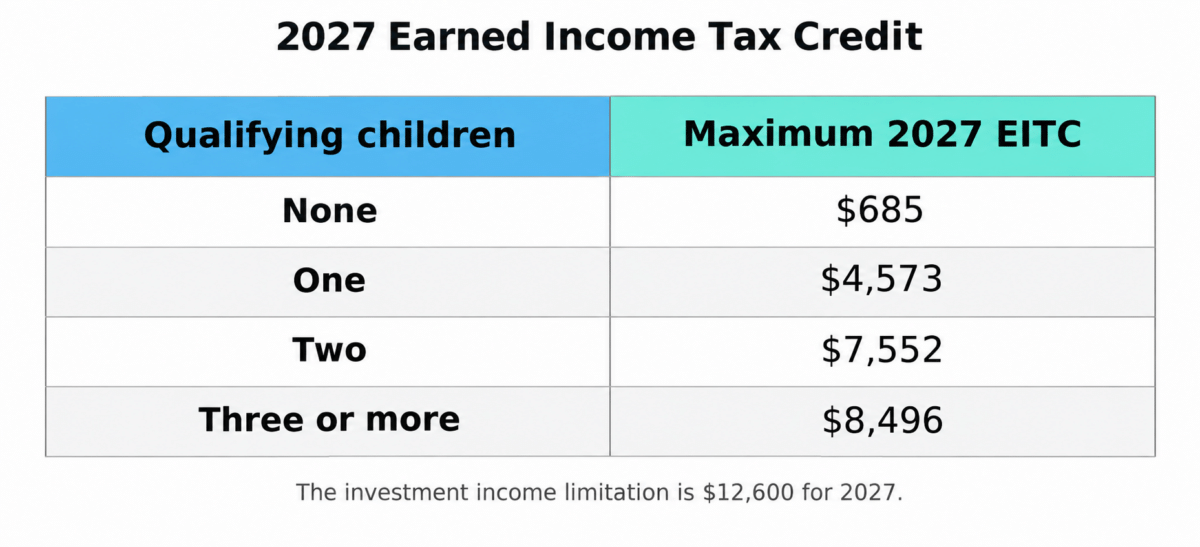
Earned Income Tax Credit (EITC). For 2027, the maximum EITC increases to $8,496 for qualifying taxpayers with three or more qualifying children, up from $8,231 in 2026. Taxpayers with fewer children—or no qualifying children—may also be eligible for the credit. The amount varies based on income, filing status, and the number of qualifying children. Income phaseouts apply, and taxpayers with investment income exceeding $12,600 are not eligible for the credit.
Kiddie Tax. For 2027, the amount used to reduce net unearned income subject to the kiddie tax increases to $1,400. That means the first $2,800 of a child’s unearned income is generally covered by the dependent’s standard deduction and the child’s tax bracket before the parent’s marginal rate applies, assuming the child has no earned income and the kiddie tax rules otherwise apply.
Qualifying Relatives. For 2027, the gross income limit for a qualifying relative increases to $5,500. That means an individual generally cannot be claimed as a qualifying relative if their gross income is $5,500 or more, even if the taxpayer provides more than half of their support. Other requirements apply, including relationship or household tests. Keep in mind that a qualifying relative doesn’t necessarily have to be related to you.
Education-Related Tax Updates
Educator Expense Deduction. For 2027, eligible educators may deduct up to $350 in qualifying unreimbursed classroom expenses, unchanged from 2026. Qualifying expenses generally include books, supplies, computer equipment, and other materials used in the classroom. Eligible educators can claim the deduction even if they don’t itemize.
Employer-Provided Educational Assistance. For 2027, employees may exclude up to $5,400 in qualifying educational assistance provided by an employer, subject to applicable requirements. The exclusion may cover tuition, fees, books, supplies, and certain student loan payments made under a qualifying employer educational assistance program.
Lifetime Learning Credit. The income phaseouts for the Lifetime Learning Credit remain unchanged for 2027. The credit begins to phase out for taxpayers with modified adjusted gross income between $80,000 and $90,000 ($160,000 and $180,000 for married couples filing jointly).
Student Loan Interest Deduction. For 2027, the maximum deduction for eligible student loan interest remains $2,500. The deduction begins to phase out for taxpayers with modified adjusted gross income above $90,000 ($180,000 for married couples filing jointly) and is completely phased out at $105,000 ($210,000 for married couples filing jointly).
Health Care And Fringe Benefit Updates
Health Care Flexible Spending Accounts (FSAs). For tax years beginning in 2027, employees may contribute up to $3,500 through voluntary salary reductions to a health care FSA, an increase of $100 from 2026. For plans that permit the carryover of unused amounts, the maximum carryover increases to $700, up from $680 in 2026. Keep in mind that employers aren’t required to offer a carryover feature.
Health Savings Accounts (HSAs). The IRS previously announced the 2027 inflation adjustments for HSAs. For 2027, the annual contribution limit increases to $4,500 for taxpayers with self-only coverage and $9,000 for those with family coverage. To qualify as a high-deductible health plan for HSA purposes in 2027, the plan must have an annual deductible of at least $1,750 for self-only coverage or $3,500 for family coverage. The maximum annual out-of-pocket expense amounts are $8,700 for self-only coverage and $17,400 for family coverage. Additional rules apply, including eligibility requirements and catch-up contributions for eligible taxpayers age 55 and older.
Long-Term Care Insurance Premiums. For 2027, the amount of eligible long-term care insurance premiums that may be treated as medical expenses depends on the taxpayer’s age. The limits range from $500 for individuals age 40 or younger to $6,290 for individuals over age 70. These amounts aren’t automatic deductions: qualifying premiums are generally subject to the usual rules and limitations for deducting medical expenses.
Medical Savings Accounts (MSAs). For 2027, the deductible for self-only coverage must be at least $3,000 but not more than $4,550, with a maximum out-of-pocket expense limit of $6,050. For family coverage, the deductible must be at least $6,050 but not more than $9,050. The maximum out-of-pocket expense limit is $11,050.
Qualified Transportation Fringe Benefits. For 2027, the monthly exclusion for qualified transportation benefits, including transit passes and commuter highway vehicle transportation, increases to $350, up from $340 in 2026. The monthly limitation for qualified parking also increases to $350.
Federal Estate And Gift Tax Updates
Federal Estate Tax Exclusion. For estates of individuals who die in 2027, the federal estate tax basic exclusion amount increases to $15,480,000 per person, up from $15,000,000 in 2026. That means an individual may generally transfer up to $15.48 million during life and at death without incurring federal estate or gift tax, after accounting for prior taxable gifts and other applicable rules. Married couples may be able to preserve a deceased spouse’s unused exclusion through portability, provided the applicable requirements are met.
Annual Gift Tax Exclusion. The annual federal gift tax exclusion increases to $20,000 per recipient for 2027, up from $19,000 in 2026. That means taxpayers may generally give up to $20,000 to as many individuals as they wish during 2027 without using their lifetime estate and gift tax exclusion. Married couples who elect to split gifts may generally give up to $40,000 per recipient. Remember that the annual exclusion applies per donor, per recipient—not as one overall annual limit.
Gifts To Noncitizen Spouses. For 2027, the annual exclusion for gifts to a spouse who is not a U.S. citizen increases to $201,000, up from $194,000 in 2026. Special rules apply to these gifts.
Business-Related Tax Updates
Section 179 Expensing. For 2027, businesses may expense up to $2,640,000 of qualifying section 179 property, up from $2,560,000 in 2026. The deduction begins to phase out when the cost of qualifying property placed in service during the year exceeds $4,230,000. The deduction is reduced dollar for dollar by the amount exceeding that threshold. The section 179 deduction limit for certain sport utility vehicles increases to $33,100 in 2027, up from $32,000 in 2026. Other eligibility requirements and limitations apply.
Employer-Provided Childcare Tax Credit. OBBBA expanded the credit available to eligible employers that provide qualifying childcare facilities and services. For 2027, the maximum credit increases to $515,943.67, up from $500,000 in 2026. For eligible small businesses, the maximum credit increases to $619,132.40.
Excess Business Loss Limitation. For 2027, the excess business loss limitation increases to $264,000 for single taxpayers and $528,000 for married couples filing jointly. The limitation generally restricts the amount of business losses that non-corporate taxpayers can use to offset non-business income in the current year. Disallowed excess business losses are generally treated as net operating loss carry-forwards to subsequent tax years.
Qualified Business Income Deduction. OBBBA made permanent the deduction under section 199A, which generally allows eligible owners of pass-through businesses to deduct up to 20% of qualified business income, subject to various limitations. For 2027, the taxable income threshold is $416,600 for married taxpayers filing jointly, $208,325 for married taxpayers filing separately, and $208,300 for all other returns. Above those thresholds, certain limitations phase in over a specified income range. OBBBA also established a minimum deduction for qualifying taxpayers with sufficient active business income. For 2027, that minimum deduction is $415, subject to eligibility requirements.
Miscellaneous (But Still Important!) Tax Updates
Foreign Earned Income Exclusion. For 2027, the foreign earned income exclusion increases to $137,300, up from $132,900 in 2026. The exclusion may be available to qualifying U.S. taxpayers who work abroad and meet the applicable requirements. Taxpayers must generally satisfy either the bona fide residence test or the physical presence test, and other restrictions apply.
Alternative Minimum Tax (AMT). The AMT is a parallel tax system intended to ensure that certain taxpayers pay at least a minimum amount of federal income tax, even after claiming specified deductions and other tax benefits. For 2027, the AMT exemption increases to $93,000 for unmarried individuals and $144,700 for married taxpayers filing jointly. The exemption begins to phase out at $515,950 for unmarried individuals and $1,031,900 for married taxpayers filing jointly.
Retirement Updates
The IRS typically announces the annual cost-of-living adjustments for retirement accounts separately from its general inflation adjustments.
Those limits include contributions to 401(k), 403(b), and certain 457 plans, as well as individual retirement arrangements (IRAs), catch-up contributions, and income phaseouts for deductible and Roth IRA contributions.
For 2027, Bloomberg Tax has already projected several of these amounts, including an IRA contribution limit of $7,500 for individuals under age 50 and higher limits for eligible older taxpayers. However, those projections should not be confused with an official IRS announcement.
More Information
All together, the IRS has announced inflation adjustments affecting nearly 70 provisions of the tax code.
Many of the numbers will look familiar to readers who saw my earlier look at projected 2027 tax brackets and deductions. That’s because Bloomberg Tax & Accounting’s projections were remarkably close to the IRS’s official numbers. There was one notable rounding difference: Bloomberg Tax identified $24,925 as a possible head-of-household standard deduction but suggested that the IRS might round the figure to $24,950. The IRS has now confirmed $24,925.
Remember that these amounts apply to taxable income in 2027, for tax returns filed in 2028. You can find all of the adjustments in Revenue Procedure 2026-35.
For more tax news, explanations, and updates throughout the year, subscribe to my free Taxgirl newsletter. It lands in your inbox every Wednesday.




Want more Taxgirl?
Get tax news, explainers, deadlines, and more delivered straight to your inbox.
Subscribe →