
2026 Tax Brackets, Standard Deductions And More: The Official IRS Numbers
In October 2025, the IRS released the federal income tax brackets, standard deduction amounts, and other inflation adjustments for the 2026 tax year.
I’m posting the 2026 numbers here so the info is easy to find as you gather your information for the upcoming tax season. Those are the official numbers for tax year 2026—that means income earned beginning January 1, 2026, and reported on the tax return you’ll file in 2027.
If you’re looking ahead, you can find my complete 2027 tax brackets and inflation adjustments here, and you can compare the 2026 numbers to 2027 here. For now, let’s focus on 2026. Here are the numbers you need to know.
Tax Brackets
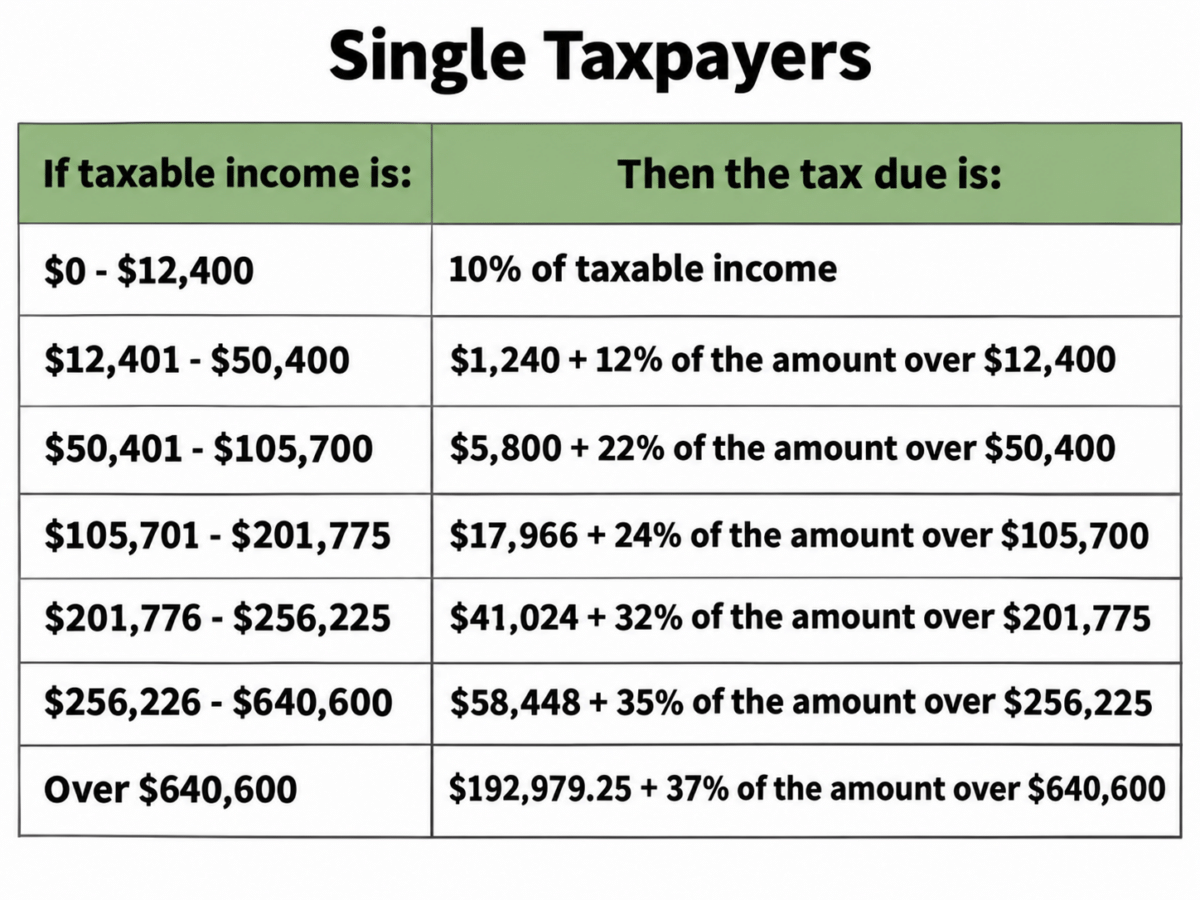
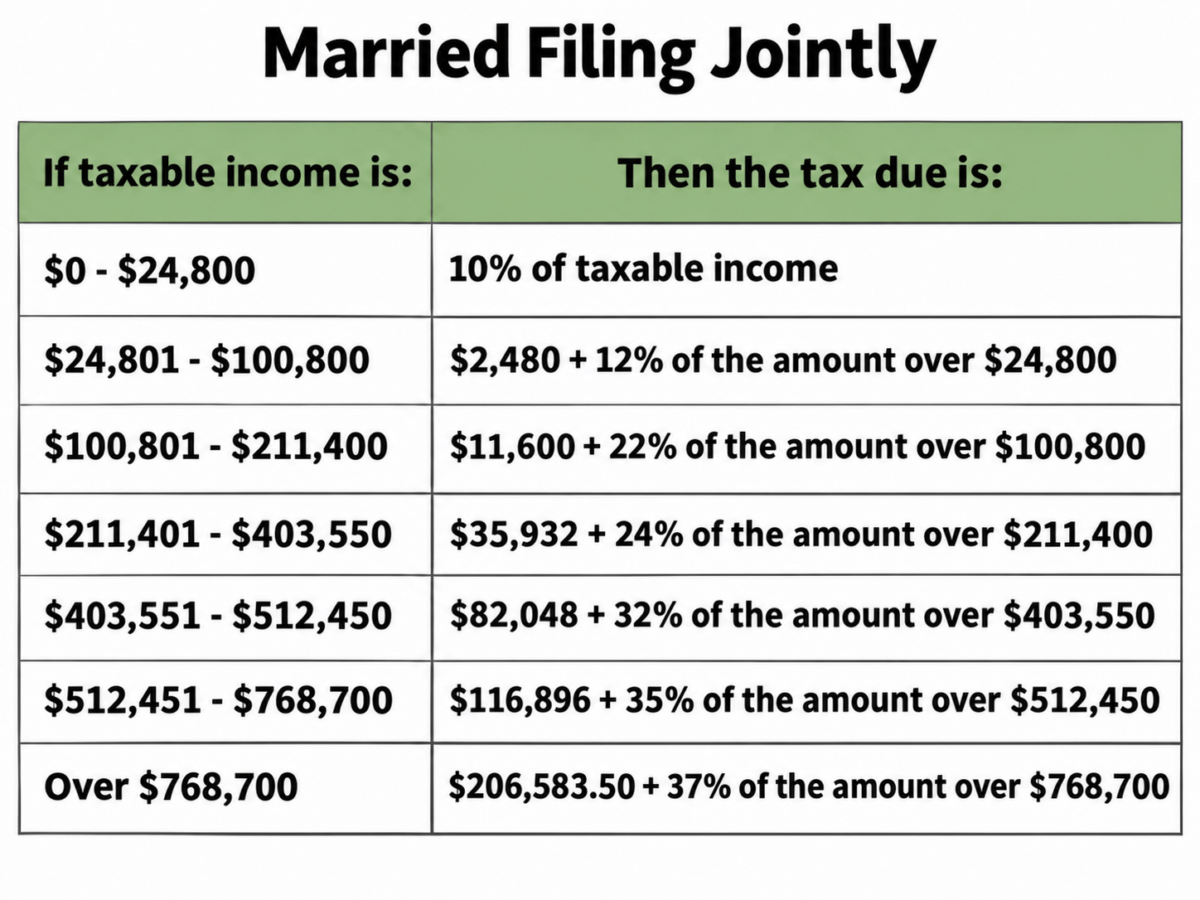
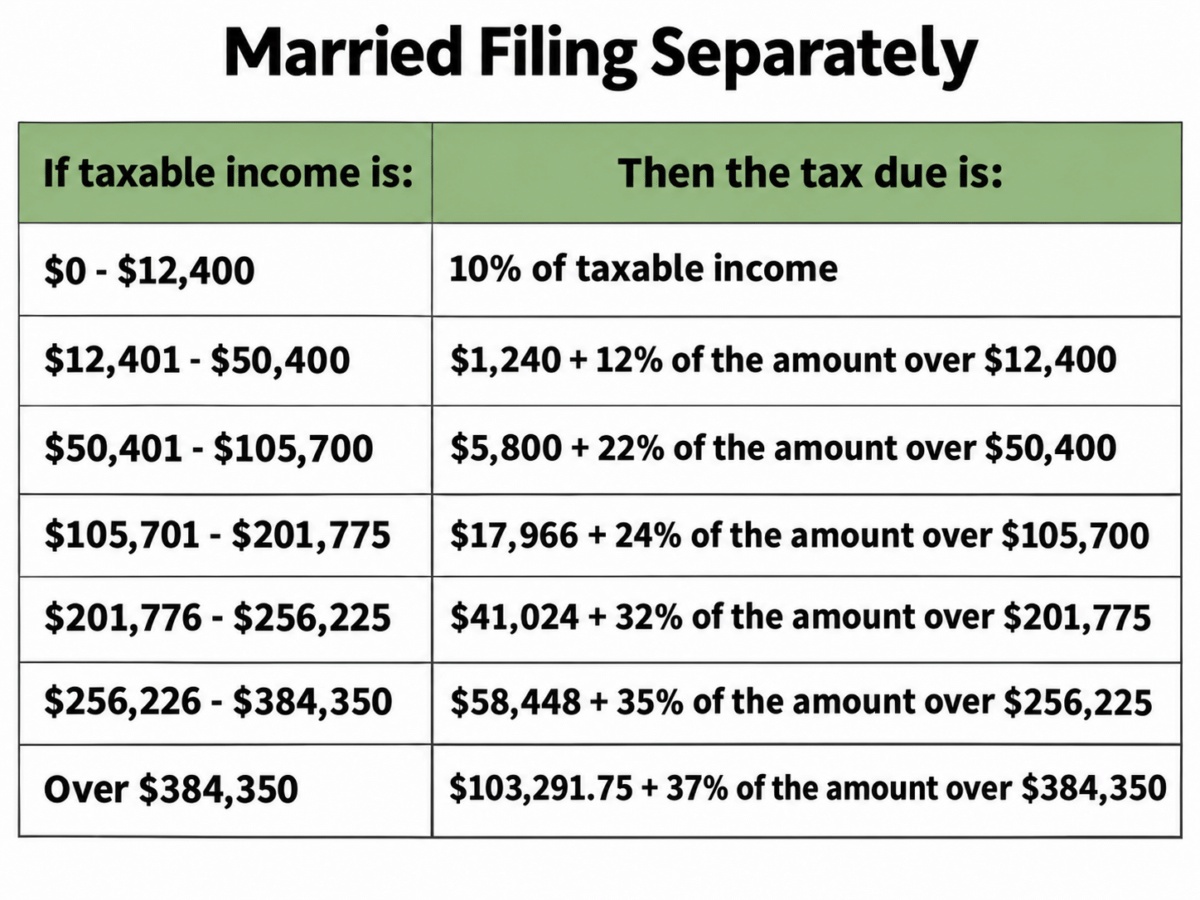
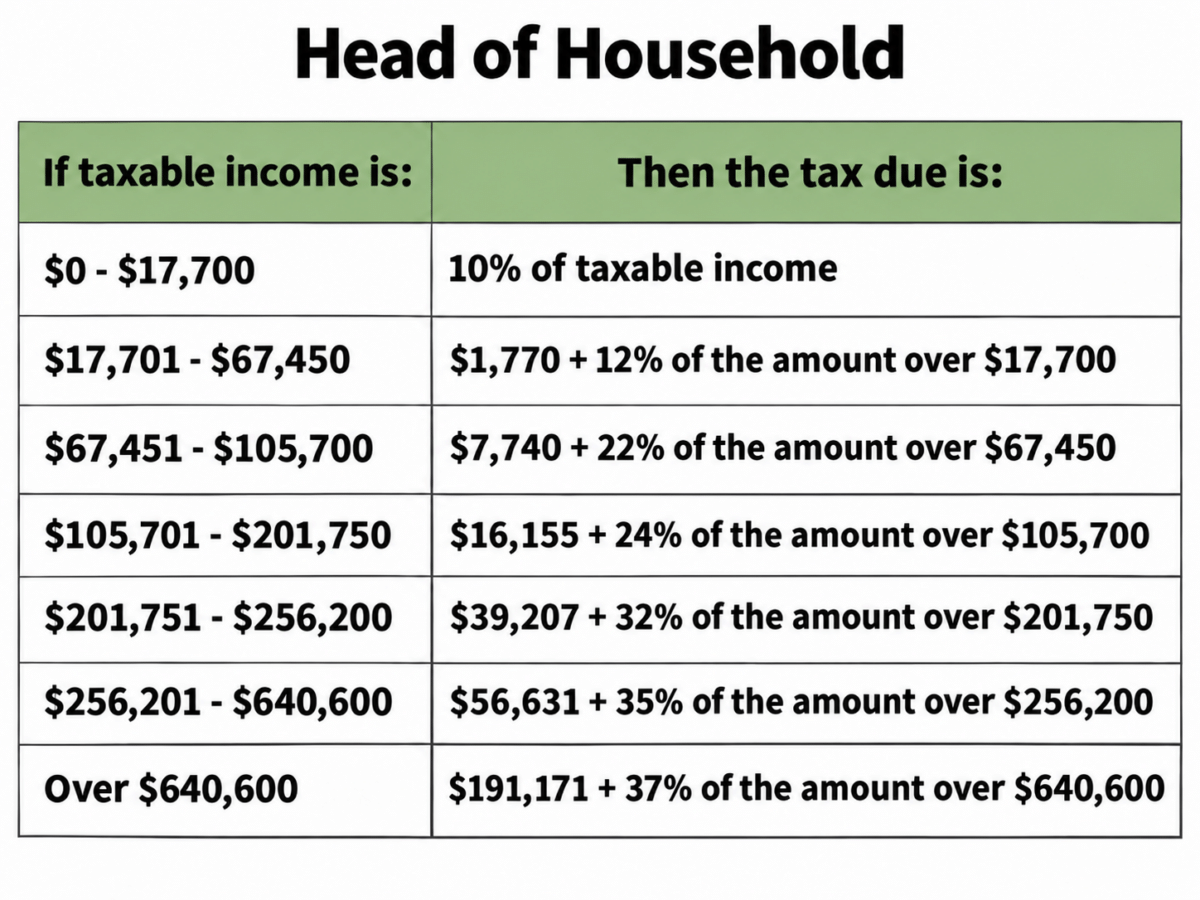
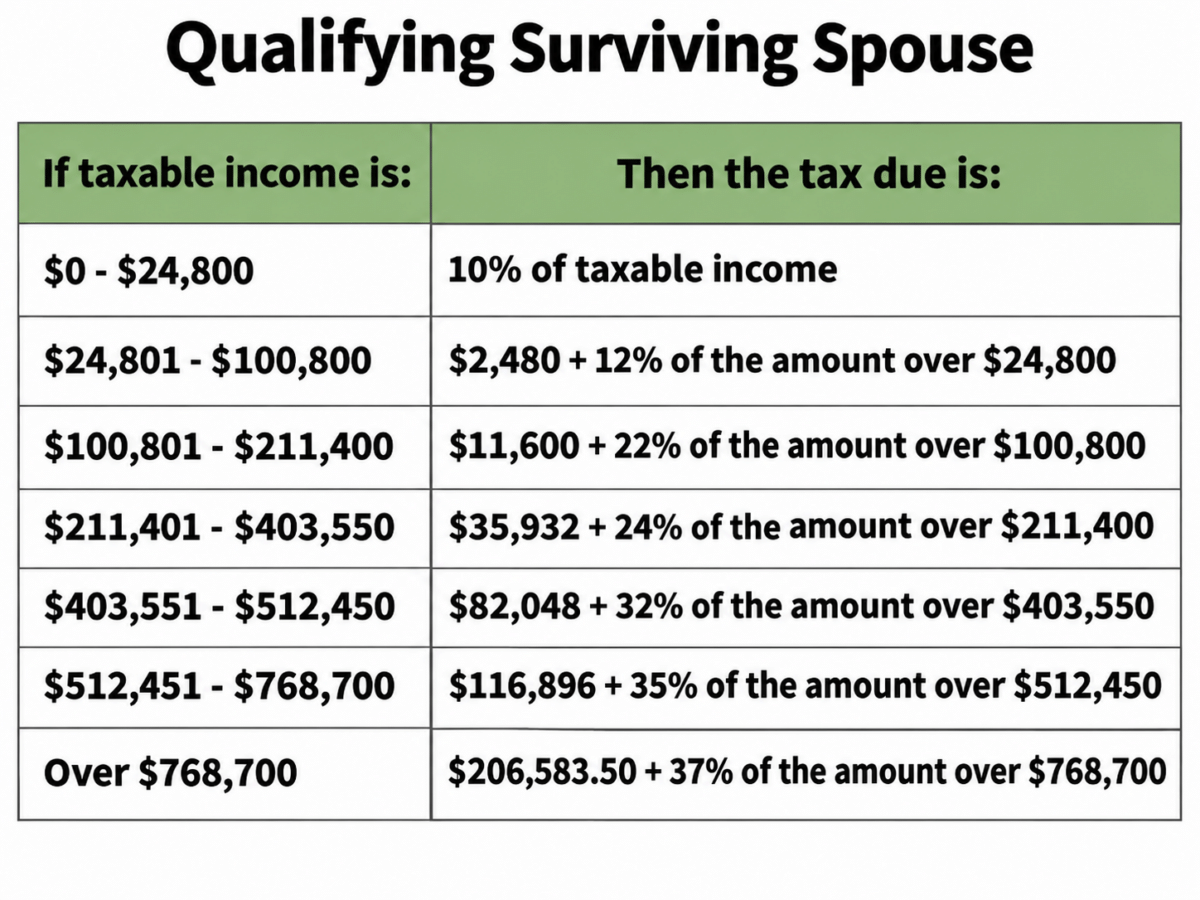
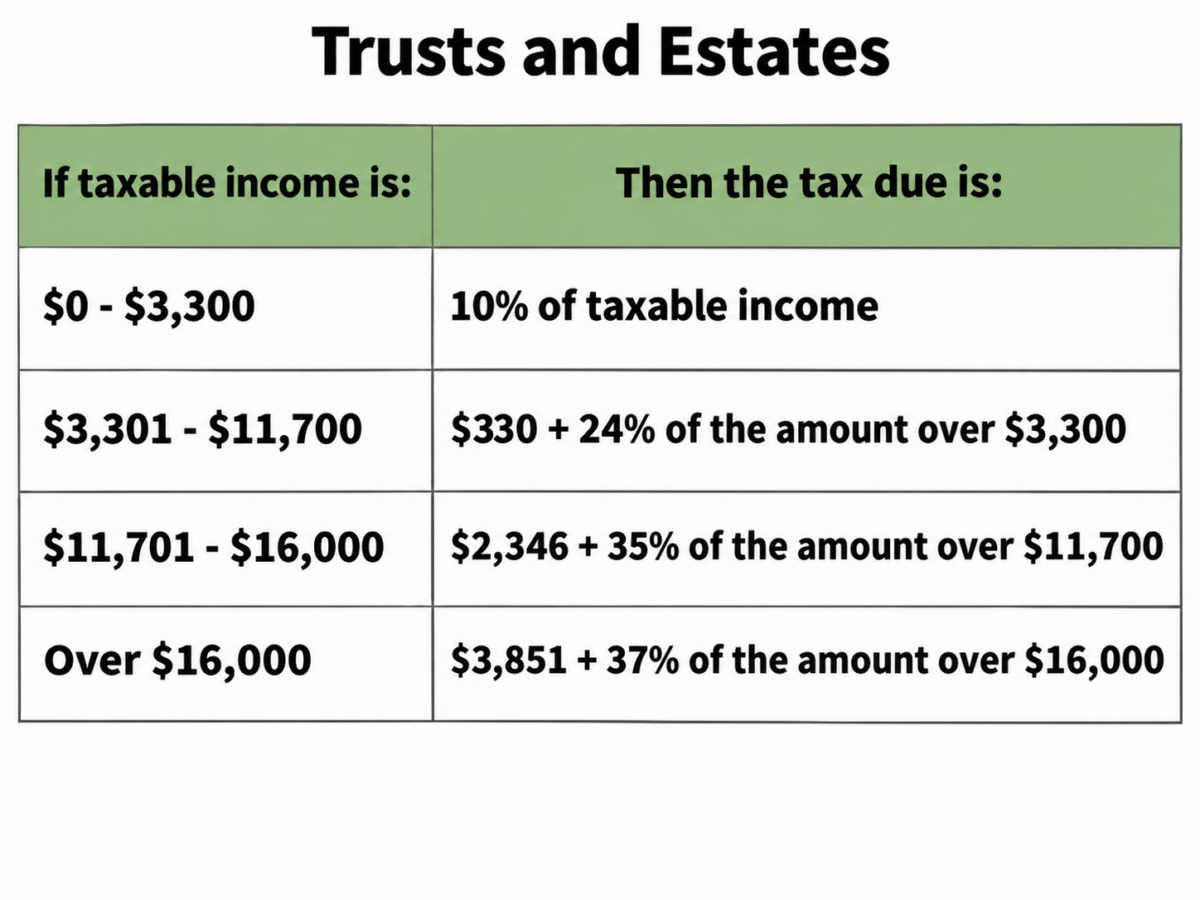
There are seven federal income tax rates for individual taxpayers in 2026: 10%, 12%, 22%, 24%, 32%, 35%, and 37%.
Those rates remain unchanged in 2026 from 2025, but the income thresholds have increased to account for inflation. That means taxpayers can generally earn more before moving into a higher marginal tax bracket, which matters because our federal income tax system is progressive.
Here’s how the tax schedules break down for 2026:

Standard Deductions
The standard deduction is a fixed amount you can subtract from your income to reduce the amount subject to federal income tax. You either claim the standard deduction or itemize your deductions on Schedule A.
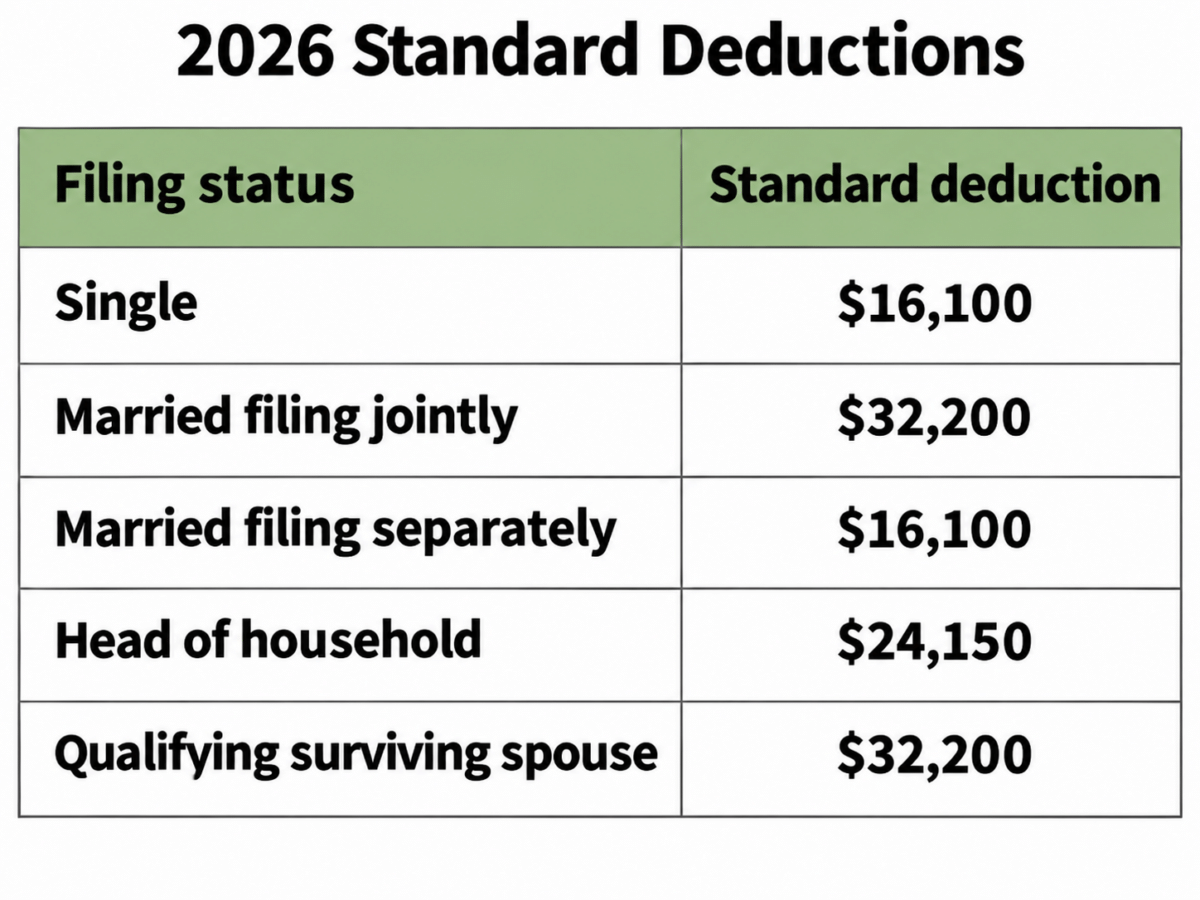 For single taxpayers and married individuals filing separately, the standard deduction is $16,100, up from $15,750 in 2025.
For married couples filing jointly, the standard deduction is $32,200, an increase of $700 from 2025. Heads of household may claim a standard deduction of $24,150, up from $23,625.
These amounts reflect changes under OBBBA, which increased the standard deduction amounts and made the higher deductions permanent.
Additional Standard Deduction For Age Or Blindness. For 2026, taxpayers who are age 65 or older or blind may qualify for an additional standard deduction of $1,650. That amount increases to $2,050 for taxpayers who are unmarried and not qualifying surviving spouses. If you are both age 65 or older and blind, you may qualify for both additional amounts.
Standard Deduction For Dependents. For 2026, the standard deduction for a dependent is limited to the greater of $1,350 or the dependent’s earned income plus $450. The deduction cannot exceed the regular standard deduction for the dependent’s filing status. Additional amounts may apply if the dependent is age 65 or older or blind.
Personal Exemptions
Personal exemptions remain at $0 for 2026. The Tax Cuts and Jobs Act (TCJA) eliminated personal exemptions beginning in 2018, and OBBBA made that elimination permanent.
Itemized Deductions
The old overall limitation on itemized deductions was eliminated beginning in 2018. OBBBA made that elimination permanent, although taxpayers in the highest 37% federal income tax bracket are subject to a limitation on the tax benefit of certain itemized deductions. That limitation generally reduces the maximum tax benefit of affected deductions to 35 cents on the dollar.
Capital Gains
Long-term capital gains are typically taxed at preferential federal income tax rates of 0%, 15%, or 20%, depending on taxable income and filing status. The rates haven’t changed for 2026, but the income thresholds have increased.
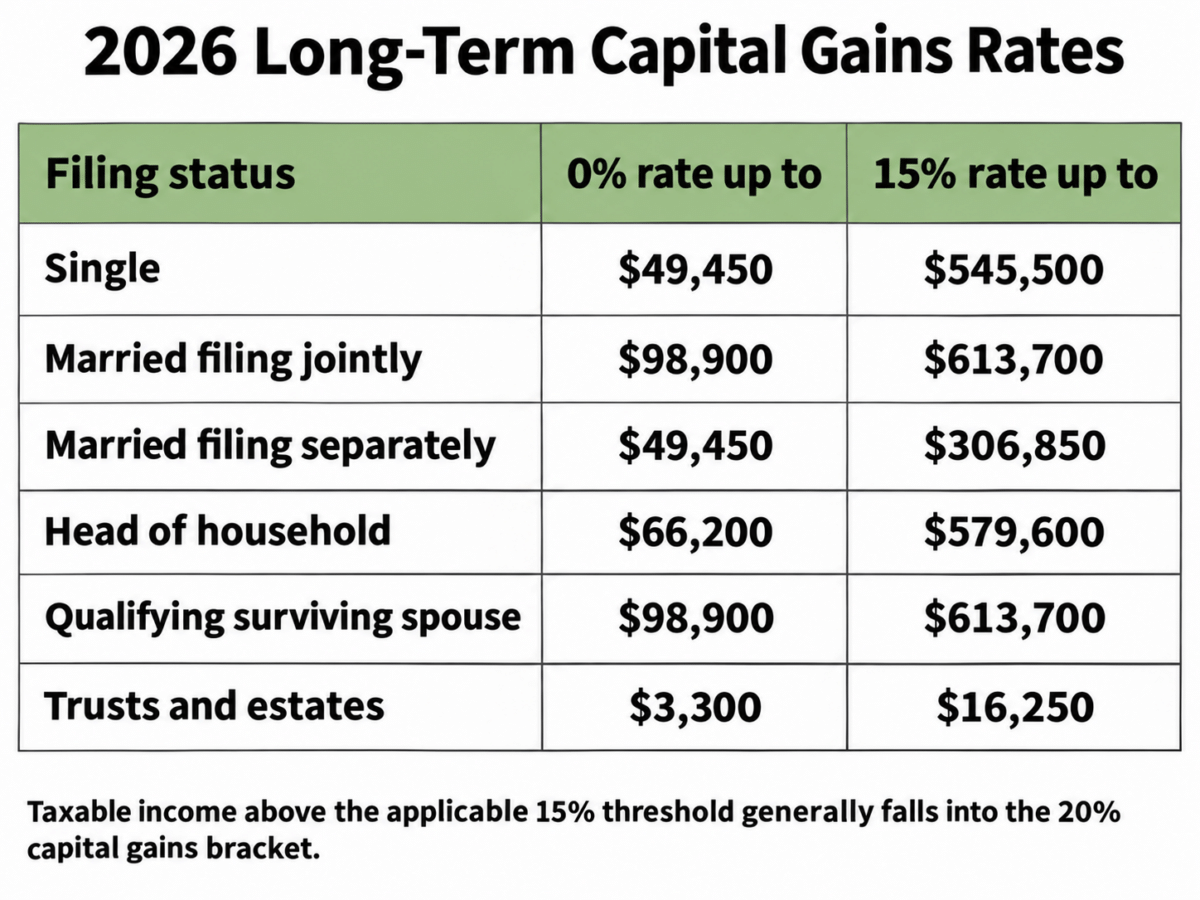
Taxable income above the applicable 15% threshold falls into the 20% long-term capital gains bracket.
Short-term capital gains are typically taxed at ordinary income tax rates. Special rules and rates may apply to certain assets, including collectibles, and some taxpayers may also owe the additional 3.8% net investment income tax.
Family-Related Tax Updates
Child Tax Credit. For 2026, the maximum child tax credit is $2,200 per qualifying child. Of that amount, up to $1,700 may be refundable, subject to eligibility requirements. Income limitations and other restrictions apply.
Earned Income Tax Credit (EITC). For 2026, the maximum EITC is $8,231 for qualifying taxpayers with three or more qualifying children, up from $8,046 in 2025. Taxpayers with fewer qualifying children—or no qualifying children—may also qualify for the credit.
Here’s how the maximum amounts break down:
The amount of the credit varies depending on income, filing status, and the number of qualifying children. Income phaseouts apply, and taxpayers with certain investment income exceeding $12,200 are not eligible for the credit.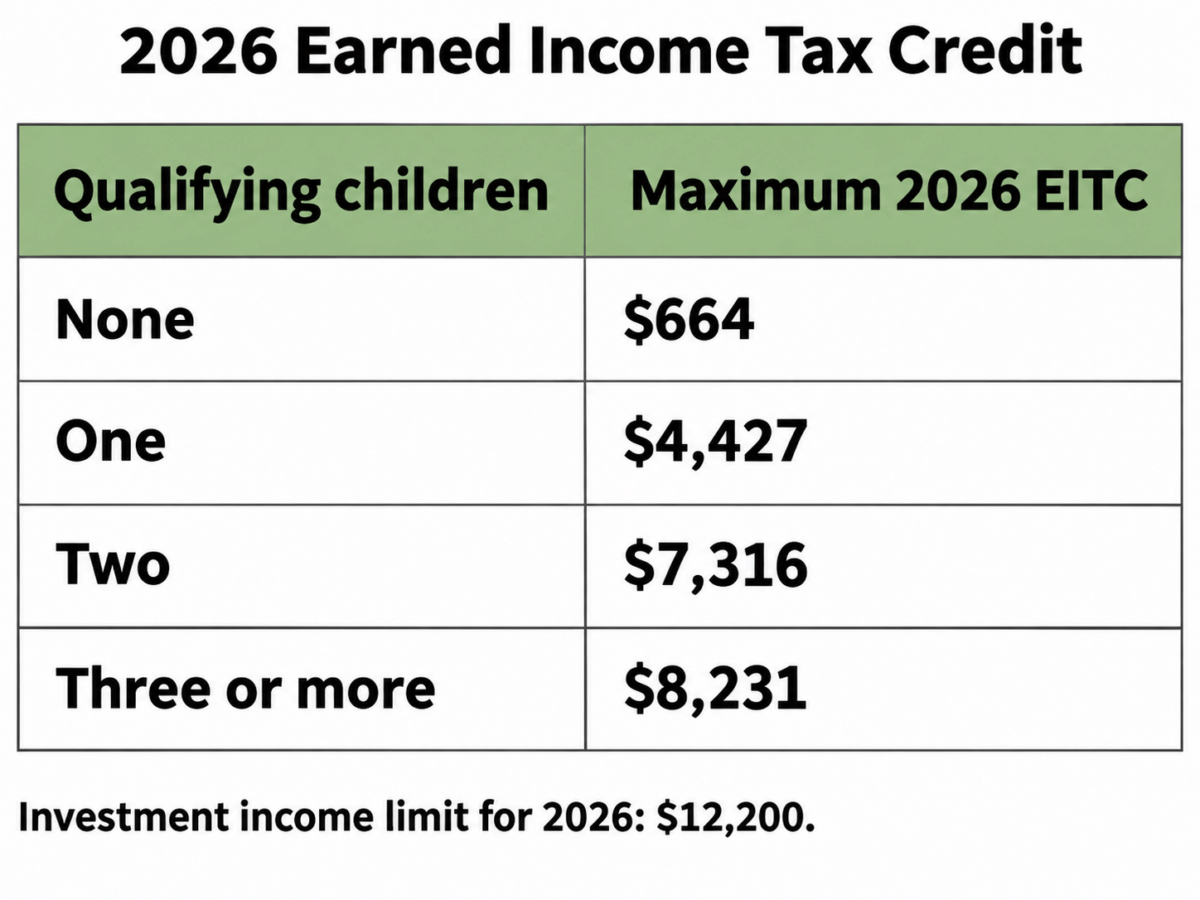
Adoption Credit. For 2026, the maximum adoption credit is $17,670, up from $17,280 in 2025. Of that amount, up to $5,120 may be refundable. The credit applies to qualified adoption expenses, subject to special rules for certain adoptions. For 2026, the credit begins phasing out when modified adjusted gross income exceeds $265,080 and is fully phased out at $305,080.
Kiddie Tax. The kiddie tax applies to certain children with unearned income, including interest, dividends, and capital gains. For 2026, the amount used to reduce net unearned income subject to the kiddie tax is $1,350. That means the first $2,700 of unearned income is covered by the dependent’s standard deduction and the child’s tax bracket before the parent’s marginal rate applies, assuming the child has no earned income, and the kiddie tax rules otherwise apply.
Qualifying Relatives. For 2026, the gross income limit for a qualifying relative is $5,300. That means an individual cannot be claimed as a qualifying relative if their gross income is $5,300 or more, even if the taxpayer provides more than half of their support. Other requirements also apply.
ABLE Accounts. For 2026, the annual contribution limit for Achieving a Better Life Experience (ABLE) accounts is $20,000. ABLE accounts allow eligible individuals with disabilities to save and invest money for qualified disability expenses without jeopardizing certain means-tested government benefits. Eligible working beneficiaries may be able to contribute additional amounts, subject to restrictions.
Education-Related Tax Updates
Educator Expense Deduction. For 2026, eligible educators may deduct up to $350 in qualifying unreimbursed classroom expenses, up from $300 in 2025. Qualifying expenses include books, supplies, computer equipment, and other materials used in the classroom. Eligible educators can claim this deduction even if they don’t itemize. Separate rules may allow certain qualifying educator expenses to be itemized beginning in 2026.
Employer-Provided Educational Assistance. For 2026, employees may exclude up to $5,250 in qualifying educational assistance provided by an employer. Eligible expenses may include tuition, fees, books, supplies, and certain student loan payments under a qualifying employer educational assistance program.
Lifetime Learning Credit. The income phaseouts for the Lifetime Learning Credit remain unchanged for 2026. The credit begins to phase out for taxpayers with modified adjusted gross income between $80,000 and $90,000 ($160,000 and $180,000 for married couples filing jointly). These limits aren’t adjusted for inflation.
Student Loan Interest Deduction. For 2026, the maximum deduction for eligible student loan interest remains $2,500. The deduction begins phasing out for taxpayers with modified adjusted gross income above $85,000 ($175,000 for married couples filing jointly) and is completely phased out at $100,000 ($205,000 for married couples filing jointly).
Education Savings. Beginning in 2026, the annual limit on tax-free distributions from 529 plans for qualifying elementary and secondary education expenses increases from $10,000 to $20,000 per beneficiary. The list of eligible expenses has expanded to include certain tutoring, educational materials, testing fees, and educational therapies. Certain postsecondary credentialing expenses may also qualify.
Health Care And Fringe Benefit Updates
Health Care Flexible Spending Accounts (FSAs). For tax years beginning in 2026, employees may contribute up to $3,400 through voluntary salary reductions to a health care FSA, up $100 from 2025. For plans that permit the carryover of unused funds, the maximum carryover amount increases to $680. Employers aren’t required to offer the carryover feature.
Health Savings Accounts (HSAs). The IRS separately announced the 2026 limits for HSAs. For 2026, the annual contribution limit is $4,400 for taxpayers with self-only coverage and $8,750 for those with family coverage under an eligible high-deductible health plan. Eligible individuals age 55 and older may make an additional $1,000 catch-up contribution. Other eligibility requirements and restrictions apply.
Long-Term Care Insurance Premiums. For 2026, the amount of eligible long-term care insurance premiums that may be treated as medical expenses depends on the taxpayer’s age. The limits range from $500 for individuals age 40 or younger to $6,200 for individuals over age 70. These amounts aren’t automatic deductions; qualifying premiums are subject to the usual rules and limitations for deducting medical expenses.
Medical Savings Accounts (MSAs). For 2026, the deductible for self-only coverage must be at least $2,900 but not more than $4,400, with a maximum out-of-pocket expense limit of $5,850. For family coverage, the deductible must be at least $5,850 but not more than $8,750. The maximum out-of-pocket expense limit is $10,700.
Qualified Transportation Fringe Benefits. For 2026, the monthly exclusion for qualified transportation benefits, including transit passes and commuter highway vehicle transportation, is $340, up from $325 in 2025. The monthly limitation for qualified parking is also $340.
Federal Estate And Gift Tax Updates
Federal Estate Tax Exclusion. For estates of individuals who die in 2026, the federal estate tax basic exclusion amount is $15 million per person, up from $13.99 million in 2025—that jump is thanks to OBBBA.
Annual Gift Tax Exclusion. For 2026, the annual federal gift tax exclusion remains $19,000 per recipient, unchanged from 2025. Married couples who elect to split gifts may give up to $38,000 per recipient.
Gifts To Noncitizen Spouses. For 2026, the annual exclusion for gifts to a spouse who is not a U.S. citizen increases to $194,000, up from $190,000 in 2025. Special rules apply to these gifts.
Business-Related Tax Updates
Section 179 Expensing. For 2026, businesses may expense up to $2,560,000 of qualifying section 179 property. The deduction begins to phase out when the cost of qualifying property placed in service during the year exceeds $4,090,000. The deduction is reduced dollar for dollar by the amount exceeding that threshold. For certain sport utility vehicles, the section 179 deduction is limited to $32,000 for 2026. Other eligibility requirements, taxable-income limitations, and restrictions apply.
Qualified Business Income Deduction. OBBBA made permanent the deduction under section 199A, which allows eligible owners of pass-through businesses to deduct up to 20% of qualified business income, subject to various limitations. For 2026, the taxable income thresholds are $403,500 for married taxpayers filing jointly, $201,775 for married taxpayers filing separately, and $201,750 for all other returns. Above those thresholds, certain limitations phase in over a specified income range. OBBBA also introduced a minimum section 199A deduction of $400 for eligible taxpayers meeting the applicable requirements, including at least $1,000 in aggregate qualified business income from qualifying active businesses.
Miscellaneous (But Still Important!) Tax Updates
Foreign Earned Income Exclusion. For 2026, the foreign earned income exclusion increases to $132,900, up from $130,000 in 2025. The exclusion may be available to qualifying U.S. taxpayers who work abroad and satisfy either the bona fide residence test or the physical presence test, along with other applicable requirements.
Alternative Minimum Tax (AMT). The AMT is a secondary tax system designed to ensure that certain taxpayers pay at least a minimum amount of federal income tax, even after claiming specified deductions and other tax benefits. For 2026, the AMT exemption is $90,100 for unmarried individuals and $140,200 for married taxpayers filing jointly. The exemptions begin to phase out when income exceeds $500,000 for unmarried individuals and $1 million for married couples filing jointly.
What’s New For 2026?
So what else is there? Several provisions of the One Big Beautiful Bill Act (OBBBA) take effect this year, while others that began in 2025 continue to apply.
Here’s a look at some of the changes you should know about.
Charitable Deduction For Non-Itemizers. Beginning in 2026, taxpayers who don’t itemize deductions may deduct up to $1,000 in qualifying cash charitable contributions ($2,000 for married couples filing jointly). The deduction is available in addition to the standard deduction, meaning taxpayers don’t have to itemize to receive a federal income tax benefit for qualifying charitable gifts. Contributions must be made to eligible charitable organizations; donations of property, contributions to donor-advised funds, and gifts to certain supporting organizations don’t qualify. You must also maintain appropriate records to substantiate your contributions.
Child And Dependent Care Credit. Beginning in 2026, the maximum credit rate for qualifying child and dependent care expenses increases from 35% to 50%. Taxpayers may still use up to $3,000 in qualifying expenses for one qualifying individual or $6,000 for two or more. That means the maximum credit increases to $1,500 or $3,000, respectively, for taxpayers eligible for the full 50% rate. The actual credit depends on income and qualifying expenses, and the credit remains nonrefundable.
Dependent Care Benefits. The amount of employer-provided dependent care assistance that eligible employees may exclude from income increases to $7,500 in 2026 ($3,750 for married taxpayers filing separately), up from $5,000 ($2,500 for married taxpayers filing separately). These benefits may include amounts contributed to a dependent care flexible spending account through an employer. Taxpayers can’t use the same expenses for both the exclusion and the child and dependent care credit.
State And Local Taxes. For 2026, the federal itemized deduction limitation for state and local taxes (SALT) increases to $40,400 ($20,200 for married taxpayers filing separately). The cap begins to decrease for taxpayers with modified adjusted gross income above $505,000 ($252,500 for married taxpayers filing separately), although the applicable limit generally cannot fall below $10,000 ($5,000 for married taxpayers filing separately).
Premium Tax Credit. Taxpayers who purchase health insurance through the Marketplace face two significant changes in 2026. First, the enhanced premium tax credit provisions expired at the end of 2025, restoring the general eligibility ceiling of 400% of the federal poverty level. Second, the previous repayment caps for excess advance premium tax credits have been eliminated. Taxpayers who receive more advance credit than they’re ultimately entitled to must repay the full excess amount.
Home Energy Tax Credits. Two popular homeowner credits are no longer available for new qualifying expenditures or installations in 2026. The Energy Efficient Home Improvement Credit generally ended for property placed in service after December 31, 2025, and the Residential Clean Energy Credit ended for expenditures made after that date. Separately, the Alternative Fuel Vehicle Refueling Property Credit ends for property placed in service after June 30, 2026.
Gambling Losses. Beginning in 2026, taxpayers who itemize may deduct only 90% of their wagering losses, with the deduction still limited to gambling winnings. That means a taxpayer could break even on gambling activities but still have taxable income. For example, someone with $10,000 in gambling winnings and $10,000 in losses would generally be limited to a $9,000 loss deduction, leaving $1,000 in net taxable gambling income.
Trump Accounts. A new type of tax-advantaged account for eligible children is available beginning in 2026. Children who meet the account eligibility requirements may have a Trump Account established on their behalf. U.S. citizen children born between January 1, 2025, and December 31, 2028, with valid Social Security numbers may also qualify for a one-time $1,000 federal contribution, subject to the required election and program rules.
Additional Deductions Under OBBBA (Set to expire in 2028)
No Tax On Tips. For 2026, eligible workers may deduct up to $25,000 in qualified tips received in occupations that customarily and regularly receive tips. Qualified tips include voluntary cash and charged tips received from customers, including shared tips. The deduction begins to phase out when modified adjusted gross income exceeds $150,000 ($300,000 for married couples filing jointly). Married taxpayers must file jointly to claim the deduction, and additional restrictions apply, including special rules for self-employed workers.
No Tax On Overtime. For 2026, eligible workers may deduct up to $12,500 in qualified overtime compensation ($25,000 for married couples filing jointly). But the deduction doesn’t apply to all overtime pay—it applies only to the portion of overtime compensation that exceeds the worker’s regular rate of pay and is required under the Fair Labor Standards Act (FLSA). For example, if an employee receives time-and-a-half pay, it’s the additional “half” that qualifies, not the entire overtime payment. The deduction begins phasing out when modified adjusted gross income exceeds $150,000 ($300,000 for joint filers). Married taxpayers must file jointly to qualify.
No Tax On Car Loan Interest. For 2026, eligible taxpayers may deduct up to $10,000 in interest paid on loans used to purchase qualifying new vehicles for personal use. The loan must have originated after December 31, 2024, and the vehicle must have undergone final assembly in the United States. Used vehicles and leases don’t qualify. The deduction begins phasing out when modified adjusted gross income exceeds $100,000 ($200,000 for married couples filing jointly). Taxpayers must include the vehicle identification number (VIN) on their tax return.
Additional Deduction For Seniors. For 2026, qualifying taxpayers age 65 and older may claim an additional deduction of up to $6,000 per person ($12,000 for married couples filing jointly if both qualify). The deduction begins phasing out when modified adjusted gross income exceeds $75,000 ($150,000 for married couples filing jointly), with a reduction equal to 6% of the income exceeding those thresholds. Married taxpayers must file jointly to claim the deduction. This benefit is separate from the additional standard deduction available to taxpayers age 65 or older or blind.
More Information
Altogether, the IRS announced inflation adjustments affecting more than 60 provisions of the tax code for 2026. Some provisions changed because of inflation, others changed because of OBBBA, and some amounts remain unchanged.
These figures apply to income earned in 2026 and reported on federal income tax returns filed in 2027. You can find the official inflation adjustments in Revenue Procedure 2025-32.