

IRS Finalizes Automatic Enrollment Rules For Retirement Plans
The Treasury has released final regulations to make it easier for Americans to save for retirement. The new rules firm up the automatic enrollment requirements for certain workplace retirement plans under the SECURE 2.0 Act.
Treasury estimates that the move toward automatic enrollment will increase retirement savings by an average of $4.2 billion annually between 2023 and 2032. The agency also projects that participation in affected retirement plans will increase from 70% to 77%, with affected taxpayers saving an average of $1,900 more per year.
The goal is to make saving easier. For workers covered by the rules, participation becomes the default: You’ll be automatically enrolled in your workplace retirement plan unless you opt out.
What Is Automatic Enrollment?
Traditionally, to participate in a workplace retirement plan, you had to affirmatively opt in. That typically meant reviewing enrollment materials, choosing a contribution amount, and selecting investments. It could be intimidating for many workers, so they simply chose to skip it.
Automatic enrollment does the opposite. Now, employers may be required to enroll eligible employees in a retirement plan at a specified contribution rate unless they opt out or elect a different rate. The contributions typically come directly from employees’ paychecks.
It isn’t a new concept. The Pension Protection Act of 2006 helped kick start automatic contribution arrangements, but employers could largely make automatic enrollment optional. That changed with SECURE 2.0, which made automatic enrollment mandatory for many newly established 401(k) and 403(b) plans beginning with plan years after December 31, 2024.
How Much Will Employees Contribute?
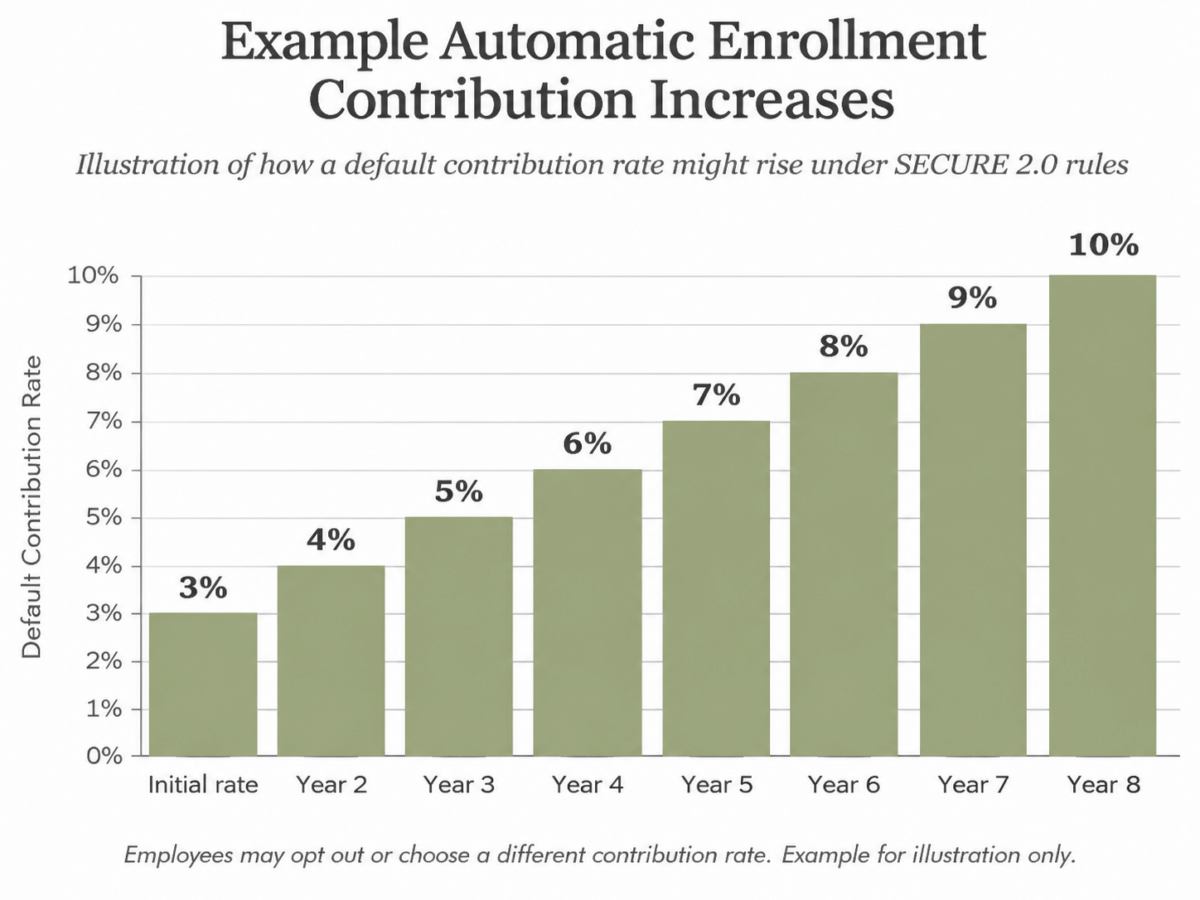
Under the final regulations, covered plans must set an initial default contribution rate—the percentage of your paycheck you put aside for retirement—of at least 3% of compensation, but no more than 10%. The rate must then automatically increase by at least one percentage point each year after the initial participation period until it reaches at least 10%. Plans can continue automatic increases beyond that amount, but the default contribution rate cannot exceed 15%.
For example, a plan beginning with a 3% default contribution rate and increasing that rate by one percentage point annually would eventually reach 10%. Here’s how that would look:
The regulations define the initial period as beginning when you first become eligible to contribute (or when the requirement first applies, if later) and ending on the last day of the following plan year.
Importantly, as an employee, you remain in control of your contributions. You can opt out of automatic enrollment entirely or elect a contribution rate that differs from the plan’s default percentage.
Can Employees Withdraw Automatically Enrolled Contributions?
Yes. Covered plans must allow employees to elect to withdraw their automatically enrolled contributions, along with any associated earnings, within 90 days after the first default contribution.
The withdrawn amounts are included in your gross income for the year of distribution, but they are not subject to the usual 10% additional tax on early retirement distributions. It may seem odd, but it also lets you reverse automatic contributions shortly after enrollment if you decide the arrangement isn’t right for you.
Which Retirement Plans Must Comply?
The automatic enrollment requirements apply to certain 401(k) and 403(b) retirement plans established on or after December 29, 2022. However, SECURE 2.0 includes several important exceptions. The requirements do not apply to:
- Older plans. Qualifying 401(k) and 403(b) plans established before December 29, 2022, are generally exempt.
- Small businesses. Businesses that normally employ 10 or fewer employees qualify for an exception, subject to transition rules if their workforce grows.
- New businesses. Employers that have existed for fewer than three years qualify for an exception.
- Governmental plans. Plans maintained by governmental employers are exempt.
- Church plans. Qualifying church plans are exempt.
- SIMPLE 401(k) plans. These plans are specifically excluded.
One important clarification applies to small businesses. Once an employer exceeds the threshold and automatic enrollment requirements apply, reducing the workforce to 10 or fewer employees in a later year does not restore the exception.
What Happens If Employees Don’t Choose Investments?
If you don’t choose how to invest your retirement contributions, the plan generally must put the money into a default investment option, such as a target-date retirement fund. The final regulations clarify that different rules apply to plans where the employer, rather than the employee, makes the investment decisions.
What Changes For Employers?
In addition to clarifying which employees must be covered and how contribution rates increase, the final regulations provide guidance intended to make automatic enrollment easier to administer. For example, employers may have flexibility as to when automatic contribution increases occur, provided the increases take effect by the applicable deadlines.
The regulations also address employee notifications. Employees covered by an eligible automatic contribution arrangement must receive notices explaining their rights, including how to opt out, change contribution rates, and understand how their contributions will be invested. To save you and your employer from drowning in paper (what the National Taxpayer Advocate Erin Collins calls the IRS’ kryptonite), the regulations allow employers to combine the automatic enrollment notice with certain other required plan notices.
Employees who are eligible but aren’t participating don’t need to receive every notice, as long as they receive the required initial enrollment information, receive annual reminders about their eligibility and election deadlines, and can still request applicable plan documents.
When Do The New Rules Take Effect?
Timing can be confusing. SECURE 2.0’s automatic enrollment requirements generally apply to covered retirement plans for plan years beginning after December 31, 2024. However, the newly issued final regulations generally apply to plan years beginning after December 31, 2027. This means the statutory requirements are already in effect for covered plans, even though employers have additional time to implement the final regulations in detail.
For earlier plan years, the IRS permits employers to comply based on a reasonable, good-faith interpretation of the requirements.
The regulations also clarify that covered plans must include all employees eligible to make elective contributions, not just newly hired workers. Employees who were eligible before 2025 may need to be included in the automatic enrollment arrangement by the 2028 plan year if they aren’t already covered. However, existing contribution elections (such as an employee who opted to contribute 0%) generally remain in effect.
What Should Employees Do Now?
If you already participate in a workplace retirement plan, you don’t necessarily need to make any changes now. However, you should review your retirement plan elections and understand how your employer’s plan handles automatic enrollment and contribution increases. Even if you don’t intend to participate, pay attention to any related notices, since failing to make an election may result in retirement contributions being deducted from your paycheck (an unwelcome surprise if you’re not counting on it).
You should also review your contribution rates, investment elections, and any employer matching contributions available under your plans. If you have questions, ask your financial or tax advisor. Automatic enrollment can help you start saving, but the default contribution rate may not necessarily be right for every employee.